
Navigation menu
Search
Databases
All Databases
eBook
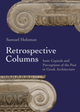
Retrospective columns : ionic capitals and perceptions of the past in Greek architecture
Holzman, Samuel
Princeton University Press
, 2025
; English
; 295 Pages
The Ionic order of ancient Greek architecture gradually evolved over the course of the sixth century BCE. In Retrospective Columns, Samuel Holzman examines an overlooked group of nine Ionic monuments that are varied in design but have capitals that combine the pillowy, convex volutes of sixth-century Ionia on one side and the crisp concave volutes of more contemporary styles on the other. Such hybrid capitals had a surprising longevity and range, spanning Greece, Italy, and Turkey between 550 and 250 BCE.
Why did ancient Greek builders sometimes revert to older carving styles and combine them with newer ones? One old theory is that outdated styles were a labor-saving shortcut—a notion Holzman puts to rest with a marble carving experiment that recreated the volutes of one capital. Rather, he argues that hybrid capitals represented an important parallel to other trends in Greek art, notably “bilingual” Attic vases, which combined older and newer painting techniques for sheer visual delight. By studying the chiaroscuro carving effects and painted polychrome decoration of Ionic architecture, Holzman shows that ancient viewers were primed to look for differences in such details, which the book illustrates with many original drawings and diagrams.
Exploring works of Ionic architecture from different periods in Ionia, the Cyclades, Athens, and the Northern Aegean, Retrospective Columns demonstrates that their builders ultimately returned to outmoded elements to establish continuity with the past, reinforcing community identities and architectural tradition.
Holzman, Samuel
Princeton University Press
, 2025
; English
; 295 Pages
The Ionic order of ancient Greek architecture gradually evolved over the course of the sixth century BCE. In Retrospective Columns, Samuel Holzman examines an overlooked group of nine Ionic monuments that are varied in design but have capitals that combine the pillowy, convex volutes of sixth-century Ionia on one side and the crisp concave volutes of more contemporary styles on the other. Such hybrid capitals had a surprising longevity and range, spanning Greece, Italy, and Turkey between 550 and 250 BCE.
Why did ancient Greek builders sometimes revert to older carving styles and combine them with newer ones? One old theory is that outdated styles were a labor-saving shortcut—a notion Holzman puts to rest with a marble carving experiment that recreated the volutes of one capital. Rather, he argues that hybrid capitals represented an important parallel to other trends in Greek art, notably “bilingual” Attic vases, which combined older and newer painting techniques for sheer visual delight. By studying the chiaroscuro carving effects and painted polychrome decoration of Ionic architecture, Holzman shows that ancient viewers were primed to look for differences in such details, which the book illustrates with many original drawings and diagrams.
Exploring works of Ionic architecture from different periods in Ionia, the Cyclades, Athens, and the Northern Aegean, Retrospective Columns demonstrates that their builders ultimately returned to outmoded elements to establish continuity with the past, reinforcing community identities and architectural tradition.
eBook
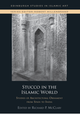
Stucco in the islamic world: studies of architectural ornament from Spain to India
McClary, Richard P.
Edinburgh University Press
, 2025
; English
; 632 Pages
This is the first major book about Islamic stucco, and the central theme is the re-examination of the uses of stucco in architecture across the Islamic world in the pre-modern period.
The book engages with new methodological approaches, including those that go beyond traditional art-historical ones, and works with a wide range of disciplines, including material science and archaeology. It includes numerous sites that have not been previously studied in detail, as well as new approaches to the study of the material, and presents a greater understanding of the use of colour and understanding of materiality.
It includes contributions from a range of leading scholars from around the world working on this ubiquitous, important, but at times ephemeral and still poorly understood, medium in a wide variety of different cultural contexts. There are separate parts for each of the main geographic areas, with each of these sections arranged broadly chronologically. Coverage includes Iran and reaches as far afield as Spain and India.
McClary, Richard P.
Edinburgh University Press
, 2025
; English
; 632 Pages
This is the first major book about Islamic stucco, and the central theme is the re-examination of the uses of stucco in architecture across the Islamic world in the pre-modern period.
The book engages with new methodological approaches, including those that go beyond traditional art-historical ones, and works with a wide range of disciplines, including material science and archaeology. It includes numerous sites that have not been previously studied in detail, as well as new approaches to the study of the material, and presents a greater understanding of the use of colour and understanding of materiality.
It includes contributions from a range of leading scholars from around the world working on this ubiquitous, important, but at times ephemeral and still poorly understood, medium in a wide variety of different cultural contexts. There are separate parts for each of the main geographic areas, with each of these sections arranged broadly chronologically. Coverage includes Iran and reaches as far afield as Spain and India.
eBook
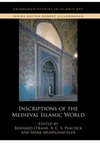
Inscriptions of the medieval Islamic world
O'Kane, Bernard; Peacock, A. C. S.; Muehlhaeusler, Mark
Edinburgh University Press
, 2023
; English
; 753 Pages
Showcases the best recent research on epigraphy across the medieval Islamic world
- Explores Islamic epigraphy from a wide range of perspectives and geographical areas, from the Maghreb to India and Central Asia and beyond
- Covers the period from the rise of Islam to the 15th century
- Details 20 case studies of inscriptions found on a wide range of objects from coins, pen cases, textiles, tiles, pottery and wall paintings to public buildings, monuments, tombs, minarets, monasteries and madrasas
- Beautifully illustrated with 200 colour photographs of inscriptions on buildings and objects
- Includes contributions from some of the leading experts in the field including Jonathan Bloom, Robert Hillenbrand, Sheila Blair, Doris Behrens-Abouseif and Carole Hillenbrand
This volume offers an overview of the state of the field, and shows the importance of Islamic inscriptions for disciplines such as art history, history and literature. The chapters range from surveys to detailed exploration of individual topics, providing an insight to some of the most recent cutting-edge work on Islamic inscriptions. It focuses on the period from the rise of Islam to the fifteenth century, ranging across the Islamic world from the Maghreb to India and Central Asia, and inscriptions in Arabic, Persian and Turkish.
The five sections of the book draw together some of the principal themes: ‘Royal Power’ investigates the role of sultanic patronage in epigraphy, and the use of inscriptions for projecting royal power. ‘Piety’ examines the relationship between epigraphy and religious practice. ‘Epigraphic Style and Function’ explores the relationship between the use of specific epigraphic styles and scripts and the function of a monument. ‘Inscribed Objects’ moves from monumental inscriptions to those on objects such as ceramics and pen-cases. The final section considers the interplay between inscriptions and historical sources as well as the utility of inscriptions as historical sources.
O'Kane, Bernard; Peacock, A. C. S.; Muehlhaeusler, Mark
Edinburgh University Press
, 2023
; English
; 753 Pages
Showcases the best recent research on epigraphy across the medieval Islamic world
- Explores Islamic epigraphy from a wide range of perspectives and geographical areas, from the Maghreb to India and Central Asia and beyond
- Covers the period from the rise of Islam to the 15th century
- Details 20 case studies of inscriptions found on a wide range of objects from coins, pen cases, textiles, tiles, pottery and wall paintings to public buildings, monuments, tombs, minarets, monasteries and madrasas
- Beautifully illustrated with 200 colour photographs of inscriptions on buildings and objects
- Includes contributions from some of the leading experts in the field including Jonathan Bloom, Robert Hillenbrand, Sheila Blair, Doris Behrens-Abouseif and Carole Hillenbrand
This volume offers an overview of the state of the field, and shows the importance of Islamic inscriptions for disciplines such as art history, history and literature. The chapters range from surveys to detailed exploration of individual topics, providing an insight to some of the most recent cutting-edge work on Islamic inscriptions. It focuses on the period from the rise of Islam to the fifteenth century, ranging across the Islamic world from the Maghreb to India and Central Asia, and inscriptions in Arabic, Persian and Turkish.
The five sections of the book draw together some of the principal themes: ‘Royal Power’ investigates the role of sultanic patronage in epigraphy, and the use of inscriptions for projecting royal power. ‘Piety’ examines the relationship between epigraphy and religious practice. ‘Epigraphic Style and Function’ explores the relationship between the use of specific epigraphic styles and scripts and the function of a monument. ‘Inscribed Objects’ moves from monumental inscriptions to those on objects such as ceramics and pen-cases. The final section considers the interplay between inscriptions and historical sources as well as the utility of inscriptions as historical sources.
eBook
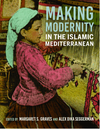
Making modernity in the Islamic Mediterranean
Graves, Margaret S.; Seggerman, Alex Dika
Indiana University Press
, 2022
; English
; 282 Pages
The Islamic world's artistic traditions experienced profound transformation in the 19th century as rapidly developing technologies and globalizing markets ushered in drastic changes in technique, style, and content.
Despite the importance and ingenuity of these developments, the 19th century remains a gap in the history of Islamic art. To fill this opening in art historical scholarship, Making Modernity in the Islamic Mediterranean charts transformations in image-making, architecture, and craft production in the Islamic world from Fez to Istanbul. Contributors focus on the shifting methods of production, reproduction, circulation, and exchange artists faced as they worked in fields such as photography, weaving, design, metalwork, ceramics, and even transportation.
Covering a range of media and a wide geographical spread, Making Modernity in the Islamic Mediterranean reveals how 19th-century artists in the Middle East and North Africa reckoned with new tools, materials, and tastes from local perspectives.
Graves, Margaret S.; Seggerman, Alex Dika
Indiana University Press
, 2022
; English
; 282 Pages
The Islamic world's artistic traditions experienced profound transformation in the 19th century as rapidly developing technologies and globalizing markets ushered in drastic changes in technique, style, and content.
Despite the importance and ingenuity of these developments, the 19th century remains a gap in the history of Islamic art. To fill this opening in art historical scholarship, Making Modernity in the Islamic Mediterranean charts transformations in image-making, architecture, and craft production in the Islamic world from Fez to Istanbul. Contributors focus on the shifting methods of production, reproduction, circulation, and exchange artists faced as they worked in fields such as photography, weaving, design, metalwork, ceramics, and even transportation.
Covering a range of media and a wide geographical spread, Making Modernity in the Islamic Mediterranean reveals how 19th-century artists in the Middle East and North Africa reckoned with new tools, materials, and tastes from local perspectives.
eBook
The production of meaning in Islamic architecture and ornament
Yasser, Tabbaa; Hillenbrand, Robert
Edinburgh University Press
, 2021
; English
; 557 Pages
This volume collects Yasser Tabbaa's investigative and interpretive articles on medieval Islamic architecture, ornament and gardens in Syria and Iraq, with comparative expansions into Anatolia, Egypt, North Africa and Spain. He examines the monuments, many of which have vanished in recent years, within the context of the political divisions and theological ruptures that characterised the Islamic world between the 11th and 13th centuries. The writings cover significant forms such as muqarnas vaulting, proportioned Qur'anic scripts and cursive public inscriptions, and monument types such as the madrasa, the hospital, the tribunal (dar al-'adl) and the citadel palace. Collectively, they present medieval Islamic architecture as a transformative process that echoes Abbasid glory and signals future developments in later Islamic architecture.
Yasser, Tabbaa; Hillenbrand, Robert
Edinburgh University Press
, 2021
; English
; 557 Pages
This volume collects Yasser Tabbaa's investigative and interpretive articles on medieval Islamic architecture, ornament and gardens in Syria and Iraq, with comparative expansions into Anatolia, Egypt, North Africa and Spain. He examines the monuments, many of which have vanished in recent years, within the context of the political divisions and theological ruptures that characterised the Islamic world between the 11th and 13th centuries. The writings cover significant forms such as muqarnas vaulting, proportioned Qur'anic scripts and cursive public inscriptions, and monument types such as the madrasa, the hospital, the tribunal (dar al-'adl) and the citadel palace. Collectively, they present medieval Islamic architecture as a transformative process that echoes Abbasid glory and signals future developments in later Islamic architecture.
eBook
Inside/outside Islamic art and architecture : a cartography ofboundaries in and of the field
Salgirli, Saygin
Bloomsbury Visual Arts
, 2021
; English
; 305 Pages
When we walk into a gallery, we have a fairly good idea where the building begins and ends; and inside, while observing a painting, we are equally confident in distinguishing between the painting-proper and its frame and borders. Yet things are often more complicated. A building defines an exterior space just as much as an interior, and what we perceive to be ornamental and marginal to a given painting may in fact be central to what it represents. In this volume, a simple question is presented: instead of dichotomous separations between inside and outside, or exterior and interior, what other relationships can we think of?
The first book of its kind to grapple with this question, Inside/Outside Islamic Art and Architecture focuses on a wide spectrum of mediums and topics, including painted manuscripts, objects, architectural decoration, architecture and urban planning, and photography. Bringing together scholars with diverse methodologies-who work on a geographical span stretching from India to Spain, and across a temporal spectrum from the 13th to the 21st century-this original book also poses engaging questions about the boundaries of the field.
Salgirli, Saygin
Bloomsbury Visual Arts
, 2021
; English
; 305 Pages
When we walk into a gallery, we have a fairly good idea where the building begins and ends; and inside, while observing a painting, we are equally confident in distinguishing between the painting-proper and its frame and borders. Yet things are often more complicated. A building defines an exterior space just as much as an interior, and what we perceive to be ornamental and marginal to a given painting may in fact be central to what it represents. In this volume, a simple question is presented: instead of dichotomous separations between inside and outside, or exterior and interior, what other relationships can we think of?
The first book of its kind to grapple with this question, Inside/Outside Islamic Art and Architecture focuses on a wide spectrum of mediums and topics, including painted manuscripts, objects, architectural decoration, architecture and urban planning, and photography. Bringing together scholars with diverse methodologies-who work on a geographical span stretching from India to Spain, and across a temporal spectrum from the 13th to the 21st century-this original book also poses engaging questions about the boundaries of the field.
eBook
The Amsterdam Town Hall in words and images : constructing wonders
Bussels, Stijn; Eck, Caroline van; Oostveldt, Bram van
Bloomsbury Visual Arts
, 2021
; English
; 257 Pages
The most famous monument of the Dutch Golden Age is undoubtedly the Amsterdam Town Hall by architect Jacob van Campen inaugurated in 1655. Today we stand in awe confronted with the grand Classicist façade, the delightful horror of the sculptures in the Tribunal, and the magnificence of the huge Citizens' Hall. In the period of its construction, many artists and writers tried to capture the overwhelming impact of the building by, among other comparisons, relating it to the ancient Wonders of the World and by stressing its splendour, riches, and impressive scale. In doing so, they constructed the Town Hall as the ultimate wonder, thus offering a silent, but very powerful testimony to the power and position of the City of Amsterdam and its rulers as equals of the other European regimes.
To fully understand these mechanisms of power, this book relates the Town Hall to other, impressive buildings of the same period-the palace of the Louvre, Saint Peter's Basilica, and Banqueting House-and their visual and textual representations. Thus, this book gives a broad audience of readers new insights into the agency of magnificent buildings. The Amsterdam Town Hall in Words and Images does not restrict itself to a national scope or a purely architectural analysis, but clarifies how artists and writers all over Europe presented buildings as wonders of the world. This book is pioneering in its analysis of seventeenth and eighteenth-century paintings, prints, drawings, poems, and travel accounts and offers a new understanding of how the wondrous character of these grand buildings was constructed.
Bussels, Stijn; Eck, Caroline van; Oostveldt, Bram van
Bloomsbury Visual Arts
, 2021
; English
; 257 Pages
The most famous monument of the Dutch Golden Age is undoubtedly the Amsterdam Town Hall by architect Jacob van Campen inaugurated in 1655. Today we stand in awe confronted with the grand Classicist façade, the delightful horror of the sculptures in the Tribunal, and the magnificence of the huge Citizens' Hall. In the period of its construction, many artists and writers tried to capture the overwhelming impact of the building by, among other comparisons, relating it to the ancient Wonders of the World and by stressing its splendour, riches, and impressive scale. In doing so, they constructed the Town Hall as the ultimate wonder, thus offering a silent, but very powerful testimony to the power and position of the City of Amsterdam and its rulers as equals of the other European regimes.
To fully understand these mechanisms of power, this book relates the Town Hall to other, impressive buildings of the same period-the palace of the Louvre, Saint Peter's Basilica, and Banqueting House-and their visual and textual representations. Thus, this book gives a broad audience of readers new insights into the agency of magnificent buildings. The Amsterdam Town Hall in Words and Images does not restrict itself to a national scope or a purely architectural analysis, but clarifies how artists and writers all over Europe presented buildings as wonders of the world. This book is pioneering in its analysis of seventeenth and eighteenth-century paintings, prints, drawings, poems, and travel accounts and offers a new understanding of how the wondrous character of these grand buildings was constructed.
eBook
The Versailles effect : objects, lives, and afterlives of the domaine
Ledbury, Mark; Wellington, Robert
Bloomsbury Visual Arts
, 2020
; English
; 321 Pages
The essays in this volume show that Versailles was not the static creation of one man, but a hugely complex cultural space; a centre of power, but also of life, love, anxiety, creation, and an enduring palimpsest of aspirations, desires, and ruptures. The splendour of the Château and the masterpieces of art and design that it contains mask a more complex and sometimes more sordid history of human struggle and achievement. The case studies presented by the contributors to this book cannot provide a comprehensive account of the Palace of Versailles and its domains, the life within its walls, its visitors, and the art and architecture that it has inspired from the seventeenth century to the present day: from the palace of the Sun King to the Penthouse of Donald Trump. However, this innovative collection will reshape-or even radically redefine-our understanding of the palace of Versailles and its posterity.
Ledbury, Mark; Wellington, Robert
Bloomsbury Visual Arts
, 2020
; English
; 321 Pages
The essays in this volume show that Versailles was not the static creation of one man, but a hugely complex cultural space; a centre of power, but also of life, love, anxiety, creation, and an enduring palimpsest of aspirations, desires, and ruptures. The splendour of the Château and the masterpieces of art and design that it contains mask a more complex and sometimes more sordid history of human struggle and achievement. The case studies presented by the contributors to this book cannot provide a comprehensive account of the Palace of Versailles and its domains, the life within its walls, its visitors, and the art and architecture that it has inspired from the seventeenth century to the present day: from the palace of the Sun King to the Penthouse of Donald Trump. However, this innovative collection will reshape-or even radically redefine-our understanding of the palace of Versailles and its posterity.
eBook
The Dome of the Rock and its Umayyad mosaic inscriptions
Milwright, Marcus
Edinburgh University Press
, 2019
; English
; 317 Pages
The Dome of the Rock is a shrine located on the Temple Mount in the Old City of Jerusalem. When was it built? What meanings was it meant to convey to viewers at the time of its construction? These are questions that have preoccupied historians of Islamic art and architecture, and numerous interpretations of the Dome of the Rock have been proposed. Marcus Milwright returns to one of the most important pieces of evidence: the mosaic inscriptions running around the two faces of the octagonal arcade. His detailed examination of the physical characteristics, morphology and content of these inscriptions provides new evidence about the chronology the building and the iconography of the Dome of the Rock.
Milwright, Marcus
Edinburgh University Press
, 2019
; English
; 317 Pages
The Dome of the Rock is a shrine located on the Temple Mount in the Old City of Jerusalem. When was it built? What meanings was it meant to convey to viewers at the time of its construction? These are questions that have preoccupied historians of Islamic art and architecture, and numerous interpretations of the Dome of the Rock have been proposed. Marcus Milwright returns to one of the most important pieces of evidence: the mosaic inscriptions running around the two faces of the octagonal arcade. His detailed examination of the physical characteristics, morphology and content of these inscriptions provides new evidence about the chronology the building and the iconography of the Dome of the Rock.
eBook
The intellectual tradition in the old testament
Whybray, R.N.
De Gruyter
, 2018
; English
; 173 Pages
There is no abstract available for this title.
Whybray, R.N.
De Gruyter
, 2018
; English
; 173 Pages
There is no abstract available for this title.
