

Navigation menu
Search
Databases
All Databases
eBook
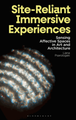
Site-reliant immersive experiences : sensing affective spaces in art and architecture
Psarologaki, Liana
Bloomsbury Visual Arts
, 2025
; English
; 185 Pages
Site-Reliant Immersive Experiences offers a new theoretical approach to the concept of immersive experiences in relation to space, site and atmosphere.
An interdisciplinary work, interweaving philosophy, theory, and creative methods in contemporary art and architecture, this book looks beyond phenomenological accounts of immersion as felt spaces, and technological experiences of VR and AR, to link immersion to actual architectural sites, to the human capacity to contemplate, and to affective atmospheres in art and architectural installations.
Fusing atmosphere, sense, and experience, the book introduces a novel vocabulary for understanding immersive spaces in art and architectural contexts from a post-phenomenological perspective. Furthermore, it offers illuminating insights through key reflective case studies of contemporary practices at the intersection of art and architecture, featuring work by Peter Zumthor, Mike Nelson, and Li Xiaodong among others.
Bringing together critical theory, neuroscience, and aesthetics of affect to create new methods of praxis in contemporary architecture and art, Site-Reliant Immersive Experiences introduces an innovative framework for understanding immersive experiences within the realm of critical spatial practice.
Psarologaki, Liana
Bloomsbury Visual Arts
, 2025
; English
; 185 Pages
Site-Reliant Immersive Experiences offers a new theoretical approach to the concept of immersive experiences in relation to space, site and atmosphere.
An interdisciplinary work, interweaving philosophy, theory, and creative methods in contemporary art and architecture, this book looks beyond phenomenological accounts of immersion as felt spaces, and technological experiences of VR and AR, to link immersion to actual architectural sites, to the human capacity to contemplate, and to affective atmospheres in art and architectural installations.
Fusing atmosphere, sense, and experience, the book introduces a novel vocabulary for understanding immersive spaces in art and architectural contexts from a post-phenomenological perspective. Furthermore, it offers illuminating insights through key reflective case studies of contemporary practices at the intersection of art and architecture, featuring work by Peter Zumthor, Mike Nelson, and Li Xiaodong among others.
Bringing together critical theory, neuroscience, and aesthetics of affect to create new methods of praxis in contemporary architecture and art, Site-Reliant Immersive Experiences introduces an innovative framework for understanding immersive experiences within the realm of critical spatial practice.
eBook
Sparke, Penny; Scholze, Jana; Kirkham, Pat; Ioannidou, Ersi; Fisher, Fiona; Lara-Betancourt, Patricia
Bloomsbury Visual Arts
, 2025
; English
; 217 Pages
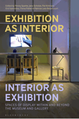
Exhibition design has long been studied in the fields of art, design and architecture, but the focus has been on the design of the exhibition narrative, rather than the design as interior space. This book breaks new ground, exploring the complex relationships which exist between exhibitions, museums and galleries and interior design.
Taking a case-study-driven approach, chapters explore a wealth of spaces
looking at contemporary art galleries and globally-renowned museums, and also subverted spaces like squatted homes, high-rises, distilleries and laboratories. Their geographic coverage ranges from socialist Eastern Europe to the US, stopping via many other countries such as Germany, Croatia, Australia and the UK.
These case studies rethink how exhibitions interact with their spatial surroundings, with key themes including the role of labour in creating these spaces, the dualism of public and private space, the impact of exhibition audiences and reception, the political implications of exhibitions and the influence of institutions.
With an interdisciplinary range of contributors, and combining a historical and contemporary outlook, this is a must-read for anyone designing or curating design-driven museum spaces.
Sparke, Penny; Scholze, Jana; Kirkham, Pat; Ioannidou, Ersi; Fisher, Fiona; Lara-Betancourt, Patricia
Bloomsbury Visual Arts
, 2025
; English
; 217 Pages
Exhibition design has long been studied in the fields of art, design and architecture, but the focus has been on the design of the exhibition narrative, rather than the design as interior space. This book breaks new ground, exploring the complex relationships which exist between exhibitions, museums and galleries and interior design.
Taking a case-study-driven approach, chapters explore a wealth of spaces
looking at contemporary art galleries and globally-renowned museums, and also subverted spaces like squatted homes, high-rises, distilleries and laboratories. Their geographic coverage ranges from socialist Eastern Europe to the US, stopping via many other countries such as Germany, Croatia, Australia and the UK.
These case studies rethink how exhibitions interact with their spatial surroundings, with key themes including the role of labour in creating these spaces, the dualism of public and private space, the impact of exhibition audiences and reception, the political implications of exhibitions and the influence of institutions.
With an interdisciplinary range of contributors, and combining a historical and contemporary outlook, this is a must-read for anyone designing or curating design-driven museum spaces.
eBook
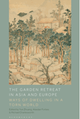
The garden retreat in Asia and Europe : ways of dwelling in a torn world
Zhuang, Yue; Forbes, Alasdair; Charlesworth, Michael
Bloomsbury Visual Arts
, 2025
; English
; 289 Pages
The Garden Retreat in Asia and Europe explores the meaning of gardens and designed landscapes as places of retreat and refuge in times of need or emergency.
In the current times of war, pandemic, climate change, and global anxiety, the value of the garden as a sanctuary, a space where we can find refuge in a natural environment, has taken on new and poignant meanings and has attracted increasing academic interest. Multidisciplinary and multicultural in scope, this book explores the meaning of gardens and designed landscapes as places of retreat and refuge in times of need or emergency. Examining perspectives from scholars including art historians, architects, philosophers, landscape architects and garden practitioners, it reassess the restorative impact of the garden, whether understood from an individual, cultural or environmental point of view.
Ranging widely across Asia and Europe, its chapters examine ideas, narratives and practices from the 4th-century Chinese poet Tao Yuanming, to the 12th century Iranian polymath Omar Khayyam, through to the late 20th-century British artist and film-maker Derek Jarman. Drawing upon traditional Asian philosophies like Buddhism, Daoism and Sufism and combining these with more recent western philosophies, the aim is to question how the unique virtues of gardens and designed landscapes can help to poise, educate, and possibly transform attitudes and behaviours in a time of personal, environmental, or cultural crisis.
At once poetic, scholarly, and rigorous, this book provides insightful reading for students and researchers in landscape architecture, garden history, architectural history, art history, and cultural history.
Zhuang, Yue; Forbes, Alasdair; Charlesworth, Michael
Bloomsbury Visual Arts
, 2025
; English
; 289 Pages
The Garden Retreat in Asia and Europe explores the meaning of gardens and designed landscapes as places of retreat and refuge in times of need or emergency.
In the current times of war, pandemic, climate change, and global anxiety, the value of the garden as a sanctuary, a space where we can find refuge in a natural environment, has taken on new and poignant meanings and has attracted increasing academic interest. Multidisciplinary and multicultural in scope, this book explores the meaning of gardens and designed landscapes as places of retreat and refuge in times of need or emergency. Examining perspectives from scholars including art historians, architects, philosophers, landscape architects and garden practitioners, it reassess the restorative impact of the garden, whether understood from an individual, cultural or environmental point of view.
Ranging widely across Asia and Europe, its chapters examine ideas, narratives and practices from the 4th-century Chinese poet Tao Yuanming, to the 12th century Iranian polymath Omar Khayyam, through to the late 20th-century British artist and film-maker Derek Jarman. Drawing upon traditional Asian philosophies like Buddhism, Daoism and Sufism and combining these with more recent western philosophies, the aim is to question how the unique virtues of gardens and designed landscapes can help to poise, educate, and possibly transform attitudes and behaviours in a time of personal, environmental, or cultural crisis.
At once poetic, scholarly, and rigorous, this book provides insightful reading for students and researchers in landscape architecture, garden history, architectural history, art history, and cultural history.
eBook
Architecture in the age of artificial intelligence: an introduction to AI for architects, 2nd ed
Leach, Neil
Bloomsbury Visual Arts
, 2025
; English
; 337 Pages
Updated to cover the latest cutting-edge developments in the field and now in full color, Architecture in the Age of Artificial Intelligence introduces AI for designers and explores its seismic impact on the future of architecture and design.
From smart assistants and ChatGPT to ground-breaking diffusion models for image generation and 3D modelling – this fully-updated second edition examines all the latest new developments in the field, and examines their profound effects on architectural practice.
Highlighting current case-studies as well as near-future applications, it explores the how AI transforms every part of the process from the inspiration and the brief to detailed performance- and data-driven design. This new edition also sheds light on key ethical and professional debates – including regulations, copyright, and the very future of creativity and of the profession itself.
Written by one of the world's leading experts in the field, this book is a must-read for all architects and designers wishing to stay at the forefront of AI developments in architecture.
eBook
Leach, Neil
Bloomsbury Visual Arts
, 2025
; English
; 337 Pages
Updated to cover the latest cutting-edge developments in the field and now in full color, Architecture in the Age of Artificial Intelligence introduces AI for designers and explores its seismic impact on the future of architecture and design.
From smart assistants and ChatGPT to ground-breaking diffusion models for image generation and 3D modelling – this fully-updated second edition examines all the latest new developments in the field, and examines their profound effects on architectural practice.
Highlighting current case-studies as well as near-future applications, it explores the how AI transforms every part of the process from the inspiration and the brief to detailed performance- and data-driven design. This new edition also sheds light on key ethical and professional debates – including regulations, copyright, and the very future of creativity and of the profession itself.
Written by one of the world's leading experts in the field, this book is a must-read for all architects and designers wishing to stay at the forefront of AI developments in architecture.
eBook
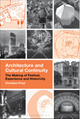
Architecture and cultural continuity : the making of festival, experience and historicity
Frost, Christian
Bloomsbury Visual Arts
, 2025
; English
; 337 Pages
Architecture and Cultural Continuity explores a dynamic way of viewing architecture – arguing that all architecture is best evaluated through active experiences in relation to cultural traditions of community and belonging, space, ritual, and setting.
A work in three parts, the book first analyses in-depth the Festival of San Giovanni in Florence, an annual series of celebrations involving the entire city. Tracing its history from its Roman origins via the Renaissance through to contemporary times, this case study is used to explore ideas of continuity and tradition and how these shape and are shaped by architecture and the city. Part 2 gathers theoretical tools from philosophy, anthropology, and performance studies to offer a framework for the appraisal of architecture – whether engaged in festival or simply part of the background to everyday life – as experience rather than form. The final part presents historic and contemporary case studies to explain the theory in practice, from Lord Leighton's House in London to Beit Beirut in Lebanon, and from Salisbury's medieval Chapterhouse to the contemporary Australian Parliament building.
Written for architectural theorists, historians, and designers alike, this book will allow the reader to assess architecture in a way that re-addresses aspects of history often obscured by post-enlightenment thinking, and reveals an architecture rooted in cultural traditions better able to contribute to the diverse communities of the future.
Frost, Christian
Bloomsbury Visual Arts
, 2025
; English
; 337 Pages
Architecture and Cultural Continuity explores a dynamic way of viewing architecture – arguing that all architecture is best evaluated through active experiences in relation to cultural traditions of community and belonging, space, ritual, and setting.
A work in three parts, the book first analyses in-depth the Festival of San Giovanni in Florence, an annual series of celebrations involving the entire city. Tracing its history from its Roman origins via the Renaissance through to contemporary times, this case study is used to explore ideas of continuity and tradition and how these shape and are shaped by architecture and the city. Part 2 gathers theoretical tools from philosophy, anthropology, and performance studies to offer a framework for the appraisal of architecture – whether engaged in festival or simply part of the background to everyday life – as experience rather than form. The final part presents historic and contemporary case studies to explain the theory in practice, from Lord Leighton's House in London to Beit Beirut in Lebanon, and from Salisbury's medieval Chapterhouse to the contemporary Australian Parliament building.
Written for architectural theorists, historians, and designers alike, this book will allow the reader to assess architecture in a way that re-addresses aspects of history often obscured by post-enlightenment thinking, and reveals an architecture rooted in cultural traditions better able to contribute to the diverse communities of the future.
eBook
Queering urbanism : insurgent spaces in the fight for justice
Yeros, Stathis G.
University of California Press
, 2024
; English
; 243 Pages
Conflicts about space and access to resources have shaped queer histories from at least 1965 to the present. As spaces associated with middle-class homosexuality enter mainstream urbanity in the United States, cultural assimilation increasingly erases insurgent aspects of these social movements. This gentrification itself leads to queer displacement. Combining urban history, architectural critique, and queer and trans theories, Queering Urbanism traces these phenomena through the history of a network of sites in the San Francisco Bay Area. Within that urban landscape, Stathis Yeros investigates how queer people appropriated existing spaces, how they expressed their distinct identities through aesthetic forms, and why they mobilized the language of citizenship to shape place and secure space. Here the legacies of LGBTQ+ rights activism meet contemporary debates about the right to housing and urban life.
Yeros, Stathis G.
University of California Press
, 2024
; English
; 243 Pages
Conflicts about space and access to resources have shaped queer histories from at least 1965 to the present. As spaces associated with middle-class homosexuality enter mainstream urbanity in the United States, cultural assimilation increasingly erases insurgent aspects of these social movements. This gentrification itself leads to queer displacement. Combining urban history, architectural critique, and queer and trans theories, Queering Urbanism traces these phenomena through the history of a network of sites in the San Francisco Bay Area. Within that urban landscape, Stathis Yeros investigates how queer people appropriated existing spaces, how they expressed their distinct identities through aesthetic forms, and why they mobilized the language of citizenship to shape place and secure space. Here the legacies of LGBTQ+ rights activism meet contemporary debates about the right to housing and urban life.
eBook
Rose, Julian
Princeton Architectural Press
, 2024
; English
; 371 Pages
An insider's look at art museums and how they shape the ways we view art, through the eyes of the architects who design them.
Architects and art lovers everywhere will enjoy this remarkable collection of interviews from sixteen of the world's most celebrated, thoughtful, and innovative architects who have designed many of the world's greatest museums. Spanning generations, geographies, and methods of architectural practice, these architects share the complex and fascinating process of creating spaces for art. Building Culture includes interviews with:
• Frank Gehry, who reveals how a half-century of dialogue with the visual arts influenced his revolutionary Guggenheim Bilbao.
• Kulapat Yantrasast, who describes his rethinking of exhibition design and how it expands the presentation of work in venerable institutions like the Metropolitan Museum of Art, where he is currently redesigning the galleries for the arts of Africa, Oceania, and the Americas.
• Walter Hood, whose long interest in improvisational techniques in music informed his design for outdoor performance spaces in the Oakland Museum.
• Elizabeth Diller, whose conception of the Shed in New York City's Hudson Yards was influenced by decades of work in conceptual and performance art.
• Esteemed architects who have designed, renovated, or created galleries for MoMA, the New Museum, and the American Museum of Natural History in New York
the National Gallery and the Tate Modern in London
the Pérez Art Museum Miami
the Centre Pompidou in Paris, the 21st Century Museum of Contemporary Art, Kanazawa in Japan
the Museum of West African Art (currently under construction) in Nigeria
and many others.
This lively compendium reveals intensely varied architectural philosophies from a diverse group of established and up-and-coming professionals. Engaging personal recollections of relationships with artists and curators, along with 80 captivating images, provide further insight into the design process and timeless inspiration for architecture students, artists, museum professionals, and anyone fascinated by architectural design, public space, and museum culture.
Rose, Julian
Princeton Architectural Press
, 2024
; English
; 371 Pages
An insider's look at art museums and how they shape the ways we view art, through the eyes of the architects who design them.
Architects and art lovers everywhere will enjoy this remarkable collection of interviews from sixteen of the world's most celebrated, thoughtful, and innovative architects who have designed many of the world's greatest museums. Spanning generations, geographies, and methods of architectural practice, these architects share the complex and fascinating process of creating spaces for art. Building Culture includes interviews with:
• Frank Gehry, who reveals how a half-century of dialogue with the visual arts influenced his revolutionary Guggenheim Bilbao.
• Kulapat Yantrasast, who describes his rethinking of exhibition design and how it expands the presentation of work in venerable institutions like the Metropolitan Museum of Art, where he is currently redesigning the galleries for the arts of Africa, Oceania, and the Americas.
• Walter Hood, whose long interest in improvisational techniques in music informed his design for outdoor performance spaces in the Oakland Museum.
• Elizabeth Diller, whose conception of the Shed in New York City's Hudson Yards was influenced by decades of work in conceptual and performance art.
• Esteemed architects who have designed, renovated, or created galleries for MoMA, the New Museum, and the American Museum of Natural History in New York
the National Gallery and the Tate Modern in London
the Pérez Art Museum Miami
the Centre Pompidou in Paris, the 21st Century Museum of Contemporary Art, Kanazawa in Japan
the Museum of West African Art (currently under construction) in Nigeria
and many others.
This lively compendium reveals intensely varied architectural philosophies from a diverse group of established and up-and-coming professionals. Engaging personal recollections of relationships with artists and curators, along with 80 captivating images, provide further insight into the design process and timeless inspiration for architecture students, artists, museum professionals, and anyone fascinated by architectural design, public space, and museum culture.
eBook
How is architecture political? : engaging Chantal Mouffe
Bedford, Joseph; Bedford, Joseph (Series Editor)
Bloomsbury Academic
, 2024
; English
; 193 Pages
Chantal Mouffe has transformed the contemporary understanding of politics through her re-reading of political theory inspired by anti-foundationalist philosophy-based on Saussure's linguistics, Freud's psychoanalysis and Derrida's deconstruction. Her writings have challenged the centrist, post-political ideology of the 1990s and presciently diagnosed the emergence of right-wing populism seen today with Trump and Brexit. For Mouffe, such populism is the result of the failed centrist conception of politics reduced to technical management. She has called for a “return to politics” on the view that social antagonisms cannot be reconciled but must be channeled into an agonistic form of institutionally stabilized struggle.
This book brings Chantal Mouffe's agonistic model of politics into direct dialogue with architecture and inquiries into the role that architecture plays constructing the political order of society, either by concealing or revealing its antagonisms and ideological conflicts. In doing so, it asks in what ways architecture operates politically
whether institutionally, in terms of its spaces and its part in forming cities, or as an aesthetic object with mediatic agency. Through this detailed exchange between Mouffe and four of the world's leading architectural thinkers
Reinhold Martin, Ines Weisman, Pier Vittorio Aureli and Sarah Whiting, a debate unfolds within the book that tests the implications of Mouffe's agonistic model of politics for architectural practice today. Through this, Bedford explores how architectural history, architectural drawing, the making of spectacular monuments, the design and policies behind housing, and the making of public and private space, all potentially contribute to the formulation of the channeling of social conflict into an agonistic form.
Bedford, Joseph; Bedford, Joseph (Series Editor)
Bloomsbury Academic
, 2024
; English
; 193 Pages
Chantal Mouffe has transformed the contemporary understanding of politics through her re-reading of political theory inspired by anti-foundationalist philosophy-based on Saussure's linguistics, Freud's psychoanalysis and Derrida's deconstruction. Her writings have challenged the centrist, post-political ideology of the 1990s and presciently diagnosed the emergence of right-wing populism seen today with Trump and Brexit. For Mouffe, such populism is the result of the failed centrist conception of politics reduced to technical management. She has called for a “return to politics” on the view that social antagonisms cannot be reconciled but must be channeled into an agonistic form of institutionally stabilized struggle.
This book brings Chantal Mouffe's agonistic model of politics into direct dialogue with architecture and inquiries into the role that architecture plays constructing the political order of society, either by concealing or revealing its antagonisms and ideological conflicts. In doing so, it asks in what ways architecture operates politically
whether institutionally, in terms of its spaces and its part in forming cities, or as an aesthetic object with mediatic agency. Through this detailed exchange between Mouffe and four of the world's leading architectural thinkers
Reinhold Martin, Ines Weisman, Pier Vittorio Aureli and Sarah Whiting, a debate unfolds within the book that tests the implications of Mouffe's agonistic model of politics for architectural practice today. Through this, Bedford explores how architectural history, architectural drawing, the making of spectacular monuments, the design and policies behind housing, and the making of public and private space, all potentially contribute to the formulation of the channeling of social conflict into an agonistic form.
eBook
Architecture and the public world : Kenneth Frampton
Frampton, Kenneth; Mitrašinovic, Miodrag
Bloomsbury Visual Arts
, 2024
; English
; 401 Pages
This book brings together Kenneth Frampton's essays from the 1960s to today which epitomize his reflections on the historical–theoretical entanglements of architecture with place, the public realm, cultural identity, urban landscape and environment, and the political question of the “predicament” of architecture in the new Millennium.
The essays explore Frampton's contention that architecture's imperative is to assume a significant responsibility for the edification and stewardship of the Arendtian 'public world.' One of the most theoretically sophisticated and politically committed architectural thinkers, Frampton's work breaks emphatically with the limits and norms of much contemporary practice and restores a sense of richness and social consequence of architecture's 'unfinished project,' while offering abiding lessons not only for architecture but for social, cultural, and design criticism alike.
Frampton, Kenneth; Mitrašinovic, Miodrag
Bloomsbury Visual Arts
, 2024
; English
; 401 Pages
This book brings together Kenneth Frampton's essays from the 1960s to today which epitomize his reflections on the historical–theoretical entanglements of architecture with place, the public realm, cultural identity, urban landscape and environment, and the political question of the “predicament” of architecture in the new Millennium.
The essays explore Frampton's contention that architecture's imperative is to assume a significant responsibility for the edification and stewardship of the Arendtian 'public world.' One of the most theoretically sophisticated and politically committed architectural thinkers, Frampton's work breaks emphatically with the limits and norms of much contemporary practice and restores a sense of richness and social consequence of architecture's 'unfinished project,' while offering abiding lessons not only for architecture but for social, cultural, and design criticism alike.

eBook
She city : designing out women’s inequity in cities
Kalms, Nicole
Bloomsbury Publishing
, 2024
; English
; 313 Pages
Rooted in feminist political thought, She City illuminates how gender shapes our urban spaces and city design. Through three sections: 'Resisting Sexist Cities', 'Designing Feminist Cities', and 'Prioritizing Safer Cities', Kalms examines barriers to women's public participation and focuses on the practical strategies, policies and actions to overcome them. Addressing significant themes such as violence against women and gender-sensitive design, She City not only provides direction for practitioners but also inspires confidence to pursue new paths towards women-centered urban environments. This book is an essential resource for architects, urban designers, planners and the plethora of built environment specialists committed to building cities that truly meet the diverse needs of women and girls.
Kalms, Nicole
Bloomsbury Publishing
, 2024
; English
; 313 Pages
Rooted in feminist political thought, She City illuminates how gender shapes our urban spaces and city design. Through three sections: 'Resisting Sexist Cities', 'Designing Feminist Cities', and 'Prioritizing Safer Cities', Kalms examines barriers to women's public participation and focuses on the practical strategies, policies and actions to overcome them. Addressing significant themes such as violence against women and gender-sensitive design, She City not only provides direction for practitioners but also inspires confidence to pursue new paths towards women-centered urban environments. This book is an essential resource for architects, urban designers, planners and the plethora of built environment specialists committed to building cities that truly meet the diverse needs of women and girls.
