

Navigation menu
Search
Databases
All Databases
eBook
Morgan, Rebeka
Wiley
, 2025
; English
; 333 Pages
Turn your passion for renovating and home design into profit
Do you love the idea of renovating and flipping houses, but you’re scared to take the plunge? Stop Dreaming and Start Renovating for Profit is an inspiring, practical how-to guide for creating financial independence by renovating and reselling residential properties. Registered builder and successful developer Rebeka Morgan has helped thousands of women buy, renovate and sell properties for profit. In this book, she shares her tried-and-tested advice for harnessing your unique strengths to strategically improve a property’s value — and build your wealth quickly.
You’ll grow your skills as a planner, decision maker and developer, learning how to be creative and find the gains that add up to thousands of dollars in profit. And you’ll discover how renovating can be a flexible, profitable business that fits into your busy life. Whether you’re caring for your family, rethinking your career or simply looking to boost your income, this book will empower you to take action and grow your earnings.
Inside, you’ll find:
Practical tools and case studies to help you see the big picture, find your vision and seize the courage to get started
Strategies for analysing feasibility and designing profitable projects
Hands-on, step-by-step guidance for managing the design and build process
Advice that will help you avoid time-consuming and costly mistakes
Tips for marketing and selling your property once the renovations are done
Renovating property is not a guaranteed shortcut to quick profits. Getting a return on your investment is about seeing a home’s potential and then taking smart steps to realise that potential. Whether you’re just getting started or you’re looking to build a business flipping homes, Stop Dreaming and Start Renovating for Profit is a can’t-miss resource.
Morgan, Rebeka
Wiley
, 2025
; English
; 333 Pages
Turn your passion for renovating and home design into profit
Do you love the idea of renovating and flipping houses, but you’re scared to take the plunge? Stop Dreaming and Start Renovating for Profit is an inspiring, practical how-to guide for creating financial independence by renovating and reselling residential properties. Registered builder and successful developer Rebeka Morgan has helped thousands of women buy, renovate and sell properties for profit. In this book, she shares her tried-and-tested advice for harnessing your unique strengths to strategically improve a property’s value — and build your wealth quickly.
You’ll grow your skills as a planner, decision maker and developer, learning how to be creative and find the gains that add up to thousands of dollars in profit. And you’ll discover how renovating can be a flexible, profitable business that fits into your busy life. Whether you’re caring for your family, rethinking your career or simply looking to boost your income, this book will empower you to take action and grow your earnings.
Inside, you’ll find:
Practical tools and case studies to help you see the big picture, find your vision and seize the courage to get started
Strategies for analysing feasibility and designing profitable projects
Hands-on, step-by-step guidance for managing the design and build process
Advice that will help you avoid time-consuming and costly mistakes
Tips for marketing and selling your property once the renovations are done
Renovating property is not a guaranteed shortcut to quick profits. Getting a return on your investment is about seeing a home’s potential and then taking smart steps to realise that potential. Whether you’re just getting started or you’re looking to build a business flipping homes, Stop Dreaming and Start Renovating for Profit is a can’t-miss resource.
eBook
Hagia Sophia in the long nineteenth century
Neumeier, Emily; Anderson, Benjamin
Edinburgh University Press
, 2024
; English
; 312 Pages
Uncovers a diversity of local encounters with Hagia Sophia in the late Ottoman Empire
- Examines the "biography" of a single monument from multiple points of view
- Nine chapters present a variety of methodological approaches drawn from the fields of history and art history
- Emphasis on local or non-traditional discourses in the Ottoman Empire and beyond
- Considers the physical changes to the structure, decoration and surroundings of Hagia Sophia
- Opens new avenues of research for readers interested in alternative accounts of modernity
Hagia Sophia—a building whose domes have defined Istanbul’s skyline for over 1500 years—has led many lives. Initially a church, subsequently a mosque, then a museum, the structure is today a monument of world heritage, even as its official status remains contested. Hagia Sophia’s global fame took shape during the long nineteenth century, when Europeans "discovered" its architectural significance. But what role did local actors play in the creation of Hagia Sophia as a modern monument?
This book seeks out the audiences of this building beyond its Western interpreters, from Ottoman officials to the diverse communities of Istanbul. Chronologically bracketed by the major renovation of the structure in the 1740s and its conversion into a museum in 1934, this volume traces the gradual transformation of Hagia Sophia within the Ottoman imaginary from imaret (mosque complex) to eser (monument); that is, from lived space to archaeological artifact.
Neumeier, Emily; Anderson, Benjamin
Edinburgh University Press
, 2024
; English
; 312 Pages
Uncovers a diversity of local encounters with Hagia Sophia in the late Ottoman Empire
- Examines the "biography" of a single monument from multiple points of view
- Nine chapters present a variety of methodological approaches drawn from the fields of history and art history
- Emphasis on local or non-traditional discourses in the Ottoman Empire and beyond
- Considers the physical changes to the structure, decoration and surroundings of Hagia Sophia
- Opens new avenues of research for readers interested in alternative accounts of modernity
Hagia Sophia—a building whose domes have defined Istanbul’s skyline for over 1500 years—has led many lives. Initially a church, subsequently a mosque, then a museum, the structure is today a monument of world heritage, even as its official status remains contested. Hagia Sophia’s global fame took shape during the long nineteenth century, when Europeans "discovered" its architectural significance. But what role did local actors play in the creation of Hagia Sophia as a modern monument?
This book seeks out the audiences of this building beyond its Western interpreters, from Ottoman officials to the diverse communities of Istanbul. Chronologically bracketed by the major renovation of the structure in the 1740s and its conversion into a museum in 1934, this volume traces the gradual transformation of Hagia Sophia within the Ottoman imaginary from imaret (mosque complex) to eser (monument); that is, from lived space to archaeological artifact.
eBook
Orbasli, Aylin; Vellinga, Marcel
Wiley-Blackwell
, 2020
; English
; 381 Pages
The combined processes of globalisation, urbanisation, environmental change, population growth and rapid technological development have resulted in an increasingly complex, dynamic and interrelated world, in which concerns about the meaning of cultural heritage and identity continue to grow. As the need for culturally and environmentally sustainable design grows, the challenge for professionals involved in the management of inherited built environments is to respond to this ever-changing context in a critical, dynamic and creative way.
Our knowledge and understanding of the principles, approaches and methods to sustainably adapt existing buildings and places is rapidly expanding. Architectural Regeneration contributes to this knowledge-base through a holistic approach that links policy with practice and establishes a theoretical framework within which to understand architectural regeneration. It includes extensive case studies of the regeneration, rehabilitation and revitalisation of architectural heritage from around the world. Different scales and contexts of architectural regeneration are discussed, including urban, suburban, rural and temporary.
At a time when regeneration policy has shifted to the recognition that 'heritage matters' and that the historic environment and creative industries are a vital driver of regeneration, an increasing workload of architectural practices concerns the refurbishment, adaptive re-use or extension of existing buildings. As a result, this book is ideal for undergraduate and graduate students of architecture, historic conservation, urban and environmental design, sustainability, and urban regeneration, as well as for practitioners and decision makers working in those fields.
Orbasli, Aylin; Vellinga, Marcel
Wiley-Blackwell
, 2020
; English
; 381 Pages
The combined processes of globalisation, urbanisation, environmental change, population growth and rapid technological development have resulted in an increasingly complex, dynamic and interrelated world, in which concerns about the meaning of cultural heritage and identity continue to grow. As the need for culturally and environmentally sustainable design grows, the challenge for professionals involved in the management of inherited built environments is to respond to this ever-changing context in a critical, dynamic and creative way.
Our knowledge and understanding of the principles, approaches and methods to sustainably adapt existing buildings and places is rapidly expanding. Architectural Regeneration contributes to this knowledge-base through a holistic approach that links policy with practice and establishes a theoretical framework within which to understand architectural regeneration. It includes extensive case studies of the regeneration, rehabilitation and revitalisation of architectural heritage from around the world. Different scales and contexts of architectural regeneration are discussed, including urban, suburban, rural and temporary.
At a time when regeneration policy has shifted to the recognition that 'heritage matters' and that the historic environment and creative industries are a vital driver of regeneration, an increasing workload of architectural practices concerns the refurbishment, adaptive re-use or extension of existing buildings. As a result, this book is ideal for undergraduate and graduate students of architecture, historic conservation, urban and environmental design, sustainability, and urban regeneration, as well as for practitioners and decision makers working in those fields.
eBook
Building reuse : sustainability, preservation, and the value of design
Merlino, Kathryn Rogers
University of Washington Press
, 2018
; English
; 230 Pages
In Building Reuse: Sustainability, Preservation, and the Value of Design, Kathryn Rogers Merlino makes an impassioned case that truly sustainable design requires reusing and reimagining existing buildings. The construction and operation of buildings is responsible for 41 percent of all primary energy use and 48 percent of all carbon emissions. The impact of the demolition and removal of an older building can greatly diminish the advantages of adding green technologies to new construction. Reusing existing buildings can be challenging to accomplish, but changing the way we think about environmentally conscious architecture has the potential to significantly reduce carbon emissions. Additionally, Merlino calls for a more expansive view of historic preservation that goes beyond keeping only the most distinctive structures and requiring that they remain fundamentally unchanged to embracing the creative reuse of even unremarkable buildings.
In support of these points, Building Reuse includes a compelling range of case studies�from an eighteen-story office building to a private home�all located in the Pacific Northwest, a region with a long history of sustainable design and urban growth policies that have made reuse projects feasible.
Merlino, Kathryn Rogers
University of Washington Press
, 2018
; English
; 230 Pages
In Building Reuse: Sustainability, Preservation, and the Value of Design, Kathryn Rogers Merlino makes an impassioned case that truly sustainable design requires reusing and reimagining existing buildings. The construction and operation of buildings is responsible for 41 percent of all primary energy use and 48 percent of all carbon emissions. The impact of the demolition and removal of an older building can greatly diminish the advantages of adding green technologies to new construction. Reusing existing buildings can be challenging to accomplish, but changing the way we think about environmentally conscious architecture has the potential to significantly reduce carbon emissions. Additionally, Merlino calls for a more expansive view of historic preservation that goes beyond keeping only the most distinctive structures and requiring that they remain fundamentally unchanged to embracing the creative reuse of even unremarkable buildings.
In support of these points, Building Reuse includes a compelling range of case studies�from an eighteen-story office building to a private home�all located in the Pacific Northwest, a region with a long history of sustainable design and urban growth policies that have made reuse projects feasible.
eBook
Wei, Peng-sheng; Zhang, Shi-hong
World Scientific Publishing
, 2016
; English
; 698 Pages
There is no abstract available for this title.
Wei, Peng-sheng; Zhang, Shi-hong
World Scientific Publishing
, 2016
; English
; 698 Pages
There is no abstract available for this title.
eBook
Original copies : architectural mimicry in contemporary China
Bosker, Bianca
University of Hawaii Press
, 2013
; English
; 178 Pages
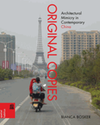
Original Copies presents the first definitive chronicle of this remarkable phenomenon in which entire townships appear to have been airlifted from their historic and geographic foundations in Europe and the Americas, and spot-welded to Chinese cities. These copycat constructions are not theme parks but thriving communities where Chinese families raise children, cook dinners, and simulate the experiences of a pseudo-Orange County or Oxford. In recounting the untold and evolving story of China's predilection for replicating the greatest architectural hits of the West, Bianca Bosker explores what this unprecedented experiment in "(Bduplitecture" implies for the social, political, architectural, and commercial landscape of contemporary China. With her lively, authoritative narrative, the author shows us how, in subtle but important ways, these homes and public spaces shape the behavior of their residents, as they reflect the achievements, dreams, and anxieties of those who inhabit them, as well as those of their developers and designers. From Chinese philosophical perspectives on copying to twenty-first century market forces, Bosker details the factors giving rise to China's new breed of building. Her analysis draws on insights from the world's leading architects, critics and city planners, and on interviews with the residents of these developments.
Bosker, Bianca
University of Hawaii Press
, 2013
; English
; 178 Pages
Original Copies presents the first definitive chronicle of this remarkable phenomenon in which entire townships appear to have been airlifted from their historic and geographic foundations in Europe and the Americas, and spot-welded to Chinese cities. These copycat constructions are not theme parks but thriving communities where Chinese families raise children, cook dinners, and simulate the experiences of a pseudo-Orange County or Oxford. In recounting the untold and evolving story of China's predilection for replicating the greatest architectural hits of the West, Bianca Bosker explores what this unprecedented experiment in "(Bduplitecture" implies for the social, political, architectural, and commercial landscape of contemporary China. With her lively, authoritative narrative, the author shows us how, in subtle but important ways, these homes and public spaces shape the behavior of their residents, as they reflect the achievements, dreams, and anxieties of those who inhabit them, as well as those of their developers and designers. From Chinese philosophical perspectives on copying to twenty-first century market forces, Bosker details the factors giving rise to China's new breed of building. Her analysis draws on insights from the world's leading architects, critics and city planners, and on interviews with the residents of these developments.
eBook
Encyclopedia of tallest buildings in the world, revised edition
Andrus, Kathyrn
World Technologies
, 2012
; English
; 175 Pages
This book explains all about Tallest Buildings in the World.
Andrus, Kathyrn
World Technologies
, 2012
; English
; 175 Pages
This book explains all about Tallest Buildings in the World.
