

Navigation menu
Search
Databases
All Databases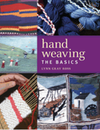
eBook
Gray Ross, Lynn
Bloomsbury Publishing
, 2022
; English
; 112 Pages
Weaving for me conjures images of ancient Mayan or Incan communities, vast tapestries, looms set by campfires, and bulky weaves that ward off the heavy snow.
eBook
Gray Ross, Lynn
Bloomsbury Publishing
, 2022
; English
; 112 Pages
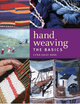
Weaving for me conjures images of ancient Mayan or Incan communities, vast tapestries, looms set by campfires, and bulky weaves that ward off the heavy snow.
eBook
Chinese dress : from the Qing Dynasty to the present day
Garrett, Valery
Tuttle Publishing
, 2020
; English
; 244 Pages
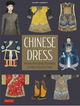
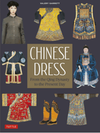
Featuring over 450 archival photographs and line drawings, Chinese Dress traces the evolution of Chinese clothing from court and formal costumes to the fashions of modern China.
A comprehensive and sumptuously illustrated book, Chinese Dress is the essential reference for costume historians, fashion designers and collectors, as well as lovers of beautiful clothes everywhere. Chapters include:
Dress of the Qing Manchu Rulers 1644-1911
Dress of the Manchu Consorts 1644-1911
Attire of Mandarins and Merchants
Attire of Chinese Women
Republican Dress 1912-1949
Clothing of the Lower Classes
Clothing for Children
Dress in New China 1950-2006
From Imperial robes to foot binding to the cheongsam, Chinese Dress spotlights traditional Chinese dress against a background of historical, cultural and social change, opening a fascinating window for anyone seeking to deepen their understanding of China, Chinese culture and Chinese fashion history.
Garrett, Valery
Tuttle Publishing
, 2020
; English
; 244 Pages
Featuring over 450 archival photographs and line drawings, Chinese Dress traces the evolution of Chinese clothing from court and formal costumes to the fashions of modern China.
A comprehensive and sumptuously illustrated book, Chinese Dress is the essential reference for costume historians, fashion designers and collectors, as well as lovers of beautiful clothes everywhere. Chapters include:
Dress of the Qing Manchu Rulers 1644-1911
Dress of the Manchu Consorts 1644-1911
Attire of Mandarins and Merchants
Attire of Chinese Women
Republican Dress 1912-1949
Clothing of the Lower Classes
Clothing for Children
Dress in New China 1950-2006
From Imperial robes to foot binding to the cheongsam, Chinese Dress spotlights traditional Chinese dress against a background of historical, cultural and social change, opening a fascinating window for anyone seeking to deepen their understanding of China, Chinese culture and Chinese fashion history.
eBook
African lace-bark in the Caribbean : the construction of race, class, and gender
Buckridge, Steeve O.
Bloomsbury Academic
, 2018
; English
; 212 Pages
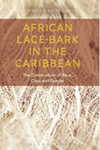
In Caribbean history, the European colonial plantocracy created a cultural diaspora in which African slaves were torn from their ancestral homeland. In order to maintain vital links to their traditions and culture, slaves retained certain customs and nurtured them in the Caribbean. The creation of lace-bark cloth from the lagetta tree was a practice that enabled slave women to fashion their own clothing, an exercise that was both a necessity, as clothing provisions for slaves were poor, and empowering, as it allowed women who participated in the industry to achieve some financial independence.
This is the first book on the subject and, through close collaboration with experts in the field including Maroon descendants, scientists and conservationists, it offers a pioneering perspective on the material culture of Caribbean slaves, bringing into focus the dynamics of race, class and gender. Focussing on the time period from the 1660s to the 1920s, it examines how the industry developed, the types of clothes made, and the people who wore them. The study asks crucial questions about the social roles that bark cloth production played in the plantation economy and colonial society, and in particular explores the relationship between bark cloth production and identity amongst slave women.
Buckridge, Steeve O.
Bloomsbury Academic
, 2018
; English
; 212 Pages
In Caribbean history, the European colonial plantocracy created a cultural diaspora in which African slaves were torn from their ancestral homeland. In order to maintain vital links to their traditions and culture, slaves retained certain customs and nurtured them in the Caribbean. The creation of lace-bark cloth from the lagetta tree was a practice that enabled slave women to fashion their own clothing, an exercise that was both a necessity, as clothing provisions for slaves were poor, and empowering, as it allowed women who participated in the industry to achieve some financial independence.
This is the first book on the subject and, through close collaboration with experts in the field including Maroon descendants, scientists and conservationists, it offers a pioneering perspective on the material culture of Caribbean slaves, bringing into focus the dynamics of race, class and gender. Focussing on the time period from the 1660s to the 1920s, it examines how the industry developed, the types of clothes made, and the people who wore them. The study asks crucial questions about the social roles that bark cloth production played in the plantation economy and colonial society, and in particular explores the relationship between bark cloth production and identity amongst slave women.
eBook
Crazy quilts : a beginner's guide
Pillsbury, Betty Fikes
Ohio University Press
, 2016
; English
; 190 Pages
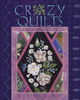
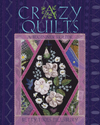
Textile artist and instructor Betty Fikes Pillsbury has won hundreds of awards for her homages to the elegance of Victorian crazy quilting. Grounded in traditional methods but crafted with elements of whimsy, each piece stands on its own as a work of art. In this definitive guide, Pillsbury shares her methods for piecing, embroidering, and embellishing. Her instructions equip readers at any level of quilting skill to use those techniques to express their own visions. Encouraging her readers to see functional and artistic possibilities beyond quilts (wall hangings, purses, and pillowcases are just some of the options), Pillsbury shows them how to make each work by hand, the slow cloth way. An inspiring primer for beginning and experienced quilters alike, this meticulously illustrated how-to book is far more expansive than previous guides. Pillsbury—a master of the form—shows us why crazy quilting belongs firmly in the twenty-first century.
Pillsbury, Betty Fikes
Ohio University Press
, 2016
; English
; 190 Pages
Textile artist and instructor Betty Fikes Pillsbury has won hundreds of awards for her homages to the elegance of Victorian crazy quilting. Grounded in traditional methods but crafted with elements of whimsy, each piece stands on its own as a work of art. In this definitive guide, Pillsbury shares her methods for piecing, embroidering, and embellishing. Her instructions equip readers at any level of quilting skill to use those techniques to express their own visions. Encouraging her readers to see functional and artistic possibilities beyond quilts (wall hangings, purses, and pillowcases are just some of the options), Pillsbury shows them how to make each work by hand, the slow cloth way. An inspiring primer for beginning and experienced quilters alike, this meticulously illustrated how-to book is far more expansive than previous guides. Pillsbury—a master of the form—shows us why crazy quilting belongs firmly in the twenty-first century.
eBook
A stitch in time : the needlework of aging women in antebellum America
Newell, Aimee E.
Ohio University Press
, 2014
; English
; 278 Pages
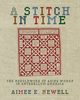
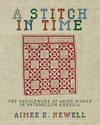
Drawing from 167 examples of decorative needlework—primarily samplers and quilts from 114 collections across the United States—made by individual women aged forty years and over between 1820 and 1860, this exquisitely illustrated book explores how women experienced social and cultural change in antebellum America. The book is filled with individual examples, stories, and over eighty fine color photographs that illuminate the role that samplers and needlework played in the culture of the time. For example, in October 1852, Amy Fiske (1785–1859) of Sturbridge, Massachusetts, stitched a sampler. But she was not a schoolgirl making a sampler to learn her letters. Instead, as she explained, “The above is what I have taken from my sampler that I wrought when I was nine years old. It was w[rough]t on fine cloth [and] it tattered to pieces. My age at this time is 66 years.” Situated at the intersection of women’s history, material culture study, and the history of aging, this book brings together objects, diaries, letters, portraits, and prescriptive literature to consider how middle-class American women experienced the aging process. Chapters explore the physical and mental effects of “old age” on antebellum women and their needlework, technological developments related to needlework during the antebellum period and the tensions that arose from the increased mechanization of textile production, and how gift needlework functioned among friends and family members. Far from being solely decorative ornaments or functional household textiles, these samplers and quilts served their own ends. They offered aging women a means of coping, of sharing and of expressing themselves. These “threads of time” provide a valuable and revealing source for the lives of mature antebellum women. Publication of this book was made possible in part through generous funding from the Coby Foundation, Ltd and from the Quilters Guild of Dallas, Helena Hibbs Endowment Fund.
Newell, Aimee E.
Ohio University Press
, 2014
; English
; 278 Pages
Drawing from 167 examples of decorative needlework—primarily samplers and quilts from 114 collections across the United States—made by individual women aged forty years and over between 1820 and 1860, this exquisitely illustrated book explores how women experienced social and cultural change in antebellum America. The book is filled with individual examples, stories, and over eighty fine color photographs that illuminate the role that samplers and needlework played in the culture of the time. For example, in October 1852, Amy Fiske (1785–1859) of Sturbridge, Massachusetts, stitched a sampler. But she was not a schoolgirl making a sampler to learn her letters. Instead, as she explained, “The above is what I have taken from my sampler that I wrought when I was nine years old. It was w[rough]t on fine cloth [and] it tattered to pieces. My age at this time is 66 years.” Situated at the intersection of women’s history, material culture study, and the history of aging, this book brings together objects, diaries, letters, portraits, and prescriptive literature to consider how middle-class American women experienced the aging process. Chapters explore the physical and mental effects of “old age” on antebellum women and their needlework, technological developments related to needlework during the antebellum period and the tensions that arose from the increased mechanization of textile production, and how gift needlework functioned among friends and family members. Far from being solely decorative ornaments or functional household textiles, these samplers and quilts served their own ends. They offered aging women a means of coping, of sharing and of expressing themselves. These “threads of time” provide a valuable and revealing source for the lives of mature antebellum women. Publication of this book was made possible in part through generous funding from the Coby Foundation, Ltd and from the Quilters Guild of Dallas, Helena Hibbs Endowment Fund.
eBook
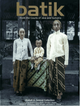
Batik : from the courts of Java and Sumatra
Smend, Rudolf G.; Majlis, Brigitte Khan; Veldhuisen, Harmen C.; Harper, Donald J.; Wenger, Peter
Periplus Editions
, 2013
; English
; 105 Pages
Batik occupies a special position in Indonesia's history and culture.
The extraordinary photographs of cloths and prints in this book demonstrate why batik is the stuff of textile legend.
These 71 batik designs, taken from the collection of famed dealer Rudolf G.
Smend, date from 1880-1930, a time still considered batik's golden age.
Complementing these extraordinary cloths are 16 vintage photo prints from the Leo Haks collection, which demonstrate how batik was worn at court and in other settings.
Smend, Rudolf G.; Majlis, Brigitte Khan; Veldhuisen, Harmen C.; Harper, Donald J.; Wenger, Peter
Periplus Editions
, 2013
; English
; 105 Pages
Batik occupies a special position in Indonesia's history and culture.
The extraordinary photographs of cloths and prints in this book demonstrate why batik is the stuff of textile legend.
These 71 batik designs, taken from the collection of famed dealer Rudolf G.
Smend, date from 1880-1930, a time still considered batik's golden age.
Complementing these extraordinary cloths are 16 vintage photo prints from the Leo Haks collection, which demonstrate how batik was worn at court and in other settings.
eBook
Things Thai : antiques, crafts, collectibles
Dansilp, Tanistha; Freeman, Michael
Tuttle Publishing
, 2012
; English
; 130 Pages
Things Thai presents over 60 different items from Thailand along with extensive cultural and historical background information.
Each is a collectible in its own right, and has some cultural relevance or a story to tell. Each object, be it a work of art, an emblem or something more everyday, represents an aspect of Thai life. Some items are devotional objects inspired by Theravada Buddhism, others are representative of the strong crafts tradition in the country, some have distinctive Thai design motifs, such as the kanok flame and vegetal motifs, others are simply pieces of clothing or jewelry--but all have a distinct bearing on Thai customs and culture.
Each item is photographed separately and detailed text explains its historical importance and cultural significance.
Dansilp, Tanistha; Freeman, Michael
Tuttle Publishing
, 2012
; English
; 130 Pages
Things Thai presents over 60 different items from Thailand along with extensive cultural and historical background information.
Each is a collectible in its own right, and has some cultural relevance or a story to tell. Each object, be it a work of art, an emblem or something more everyday, represents an aspect of Thai life. Some items are devotional objects inspired by Theravada Buddhism, others are representative of the strong crafts tradition in the country, some have distinctive Thai design motifs, such as the kanok flame and vegetal motifs, others are simply pieces of clothing or jewelry--but all have a distinct bearing on Thai customs and culture.
Each item is photographed separately and detailed text explains its historical importance and cultural significance.
eBook
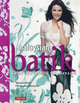
Malaysian batik : reinventing a tradition
Yunus, Noor Azlina
Tuttle Publishing
, 2012
; English
; 177 Pages
Malaysian Batik: Reinventing a Tradition, traces the history of batik, the materials, methods and motifs of the block-stamped and hand drawn methods, and the ways in which Malaysian batik has been transformed into a craft with international appeal.
Batik is more than wax and dye applied to a length of cloth. It is an art form practiced by people around Asia. With its its bolder, abstract designs and its brighter palette, Malaysian batik is a distinctly different type of batik that has brought an exciting new dimension to this ancient method of fabric art.
Historically seen as a craft, batik making in Malaysia today has segued into more of an art form, both in its creation and its uses. Historically, batik fabric was fashioned into sarongs to be worn by people across all walks of life. More often now batik fabrics are used for lifestyle products, as art pieces and, above all, for contemporary high fashion. The pieces that are created display an originality of composition and design, an effective use of color, a high level of technical expertise and a flair for working in the medium that are the hallmarks of great works of art. Many of the recent advances in Malaysian batik are due to the initiatives of the Yayasan Budi Penyayang, which has revitalized the Malaysian batik industry by adapting it to suit fashion needs and utilized the Asian fashion industry to promote and display its beauty.
Yunus, Noor Azlina
Tuttle Publishing
, 2012
; English
; 177 Pages
Malaysian Batik: Reinventing a Tradition, traces the history of batik, the materials, methods and motifs of the block-stamped and hand drawn methods, and the ways in which Malaysian batik has been transformed into a craft with international appeal.
Batik is more than wax and dye applied to a length of cloth. It is an art form practiced by people around Asia. With its its bolder, abstract designs and its brighter palette, Malaysian batik is a distinctly different type of batik that has brought an exciting new dimension to this ancient method of fabric art.
Historically seen as a craft, batik making in Malaysia today has segued into more of an art form, both in its creation and its uses. Historically, batik fabric was fashioned into sarongs to be worn by people across all walks of life. More often now batik fabrics are used for lifestyle products, as art pieces and, above all, for contemporary high fashion. The pieces that are created display an originality of composition and design, an effective use of color, a high level of technical expertise and a flair for working in the medium that are the hallmarks of great works of art. Many of the recent advances in Malaysian batik are due to the initiatives of the Yayasan Budi Penyayang, which has revitalized the Malaysian batik industry by adapting it to suit fashion needs and utilized the Asian fashion industry to promote and display its beauty.
eBook
Hauser-Schaublin, Brigitta; Nabholz-Kartaschoff, Marie-Louise; Ramseyer, Urs
Periplus Editions
, 2012
; English
; 160 Pages
In this beautifully illustrated book, three experts examine the history, production and uses of textiles in Balinese society. Many fine pieces are presented, their raw materials and methods of weaving and dyeing are described, and the complex symbolism and ritual functions of each are explained in detail.
eBook
Hauser-Schaublin, Brigitta; Nabholz-Kartaschoff, Marie-Louise; Ramseyer, Urs
Periplus Editions
, 2012
; English
; 160 Pages
In this beautifully illustrated book, three experts examine the history, production and uses of textiles in Balinese society. Many fine pieces are presented, their raw materials and methods of weaving and dyeing are described, and the complex symbolism and ritual functions of each are explained in detail.
eBook
Keller, Ila
Tuttle Publishing
, 2012
; English
; 76 Pages
This complete guide to Batik is an invaluable resource for those interested in Batik history, design, and weaving.
Here in this volume, the author has not only given a comprehensive and fascinating account of the origins and history of batik, with examples of techniques and design, but also includes a complete "How-To-Do-It" section on modern methods of creating batik.
The text is lucid and easy to follow, and the simple step-by-step format will enable the art enthusiast to investigate this rewarding and creative medium. Sample batiks by modern artists, show what can be done with craft, skill, and imagination.
The author takes the reader through all aspects of making a batik, from a simple dipping, or tie-dying, to sectional dyeing, and the more intricate five or six-color patterns. Basic materials, fabric mixtures, wax temperatures etc. are discussed fully, and more important, the practical problems often encountered by a beginner are thoughtfully explained. Here is a book of batik literally giving you the 'tricks of the trade'.

eBook
Keller, Ila
Tuttle Publishing
, 2012
; English
; 76 Pages
This complete guide to Batik is an invaluable resource for those interested in Batik history, design, and weaving.
Here in this volume, the author has not only given a comprehensive and fascinating account of the origins and history of batik, with examples of techniques and design, but also includes a complete "How-To-Do-It" section on modern methods of creating batik.
The text is lucid and easy to follow, and the simple step-by-step format will enable the art enthusiast to investigate this rewarding and creative medium. Sample batiks by modern artists, show what can be done with craft, skill, and imagination.
The author takes the reader through all aspects of making a batik, from a simple dipping, or tie-dying, to sectional dyeing, and the more intricate five or six-color patterns. Basic materials, fabric mixtures, wax temperatures etc. are discussed fully, and more important, the practical problems often encountered by a beginner are thoughtfully explained. Here is a book of batik literally giving you the 'tricks of the trade'.
