



Navigation menu
Search
Databases
All Databases
eBook
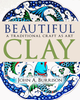
Beautiful clay : a traditional craft as art
Burrison, John A.
Indiana University Press
, 2025
; English
; 351 Pages
For most of human history, all pottery was what we would now consider traditional folk pottery. Not all artifacts go beyond the basic requirements of utility in pursuit of beauty, but Beautiful Clay considers those that do.
In Beautiful Clay, noted scholar of traditional ceramics John A. Burrison writes about how a potter applies aesthetics to utilitarian objects to transform raw clay into something beautiful. Though what is considered beautiful in art changes from culture to culture and person to person, there are universal techniques such as manipulating form, color, texture, and more that tap into clay's potential for beauty. Burrison uses an approach from a perspective of international artistry rather than an approach bound by history or geography. After beginning with more than 40,000 images that the author curated as a study resource, Beautiful Clay narrows it down to around 230 images that capture the artistry within traditional ceramics worldwide.
Beautiful Clay examines the aesthetic dimensions of what is essentially a traditional utilitarian craft, the ancient clay-based craft of pottery, from earliest times to the present.
Burrison, John A.
Indiana University Press
, 2025
; English
; 351 Pages
For most of human history, all pottery was what we would now consider traditional folk pottery. Not all artifacts go beyond the basic requirements of utility in pursuit of beauty, but Beautiful Clay considers those that do.
In Beautiful Clay, noted scholar of traditional ceramics John A. Burrison writes about how a potter applies aesthetics to utilitarian objects to transform raw clay into something beautiful. Though what is considered beautiful in art changes from culture to culture and person to person, there are universal techniques such as manipulating form, color, texture, and more that tap into clay's potential for beauty. Burrison uses an approach from a perspective of international artistry rather than an approach bound by history or geography. After beginning with more than 40,000 images that the author curated as a study resource, Beautiful Clay narrows it down to around 230 images that capture the artistry within traditional ceramics worldwide.
Beautiful Clay examines the aesthetic dimensions of what is essentially a traditional utilitarian craft, the ancient clay-based craft of pottery, from earliest times to the present.
eBook
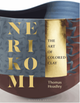
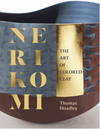
Nerikomi: the art of colored clay
Hoadley, Thomas
Bloomsbury Publishing
, 2024
; English
; 193 Pages
A fully illustrated examination of the use of color in clay, outlining its history and exploring the styles and techniques of the leading modern makers. Mix two or more colors of clay as part of a piece's design, and you are creating nerikomi. There are many techniques – stacking, stretching, slicing – but with nerikomi, the decoration is built and fired into the work's very fabric, rather than glazing it later. This beautifully illustrated introduction by accomplished nerikomi specialist Thomas Hoadley includes: – A brief history of the origins and international styles of colored clay – A section dedicated to the most honored Japanese Masters of nerikomi – Stunning examples of work from the world's leading experts – Step-by-step examples of many of the techniques employed Whether you simply enjoy the beauty of multicolored clay, or are seeking inspiration, this essential volume contains everything you need to embark on your own nerikomi projects.
Hoadley, Thomas
Bloomsbury Publishing
, 2024
; English
; 193 Pages
A fully illustrated examination of the use of color in clay, outlining its history and exploring the styles and techniques of the leading modern makers. Mix two or more colors of clay as part of a piece's design, and you are creating nerikomi. There are many techniques – stacking, stretching, slicing – but with nerikomi, the decoration is built and fired into the work's very fabric, rather than glazing it later. This beautifully illustrated introduction by accomplished nerikomi specialist Thomas Hoadley includes: – A brief history of the origins and international styles of colored clay – A section dedicated to the most honored Japanese Masters of nerikomi – Stunning examples of work from the world's leading experts – Step-by-step examples of many of the techniques employed Whether you simply enjoy the beauty of multicolored clay, or are seeking inspiration, this essential volume contains everything you need to embark on your own nerikomi projects.
eBook
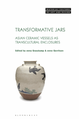
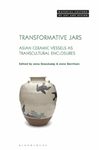
Transformative jars : Asian ceramic vessels as transcultural enclosures
Grasskamp, Anna; Gerritsen, Anne
Bloomsbury Publishing
, 2022
; English
; 329 Pages
The term 'jar' refers to any man-made shape with the capacity to enclose something. Few objects are as universal and multi-functional as a jar – regardless of whether they contain food or drink, matter or a void, life-giving medicine or the ashes of the deceased. As ubiquitous as they may seem, such containers, storage vessels and urns are, as this book demonstrates, highly significant cultural and historical artefacts that mediate between content and environment, exterior worlds and interior enclosures, local and global, this-worldly and otherworldly realms.
The contributors to this volume understand jars not only as household utensils or evidence of human civilizations, but also as artefacts in their own right. Asian jars are culturally and aesthetically defined crafted goods and as objects charged with spiritual meanings and ritual significance. Transformative Jars situates Asian jars in a global context and focuses on relationships between the filling, emptying and re-filling of jars with a variety of contents and meanings through time and throughout space.
Transformative Jars brings together an interdisciplinary team of scholars with backgrounds in curating, art history and anthropology to offer perspectives that go beyond archaeological approaches with detailed analyses of a broad range of objects. By looking at jars as things in the hands of makers, users and collectors, this book presents these objects as agents of change in cultures of craftsmanship and consumption.
Grasskamp, Anna; Gerritsen, Anne
Bloomsbury Publishing
, 2022
; English
; 329 Pages
The term 'jar' refers to any man-made shape with the capacity to enclose something. Few objects are as universal and multi-functional as a jar – regardless of whether they contain food or drink, matter or a void, life-giving medicine or the ashes of the deceased. As ubiquitous as they may seem, such containers, storage vessels and urns are, as this book demonstrates, highly significant cultural and historical artefacts that mediate between content and environment, exterior worlds and interior enclosures, local and global, this-worldly and otherworldly realms.
The contributors to this volume understand jars not only as household utensils or evidence of human civilizations, but also as artefacts in their own right. Asian jars are culturally and aesthetically defined crafted goods and as objects charged with spiritual meanings and ritual significance. Transformative Jars situates Asian jars in a global context and focuses on relationships between the filling, emptying and re-filling of jars with a variety of contents and meanings through time and throughout space.
Transformative Jars brings together an interdisciplinary team of scholars with backgrounds in curating, art history and anthropology to offer perspectives that go beyond archaeological approaches with detailed analyses of a broad range of objects. By looking at jars as things in the hands of makers, users and collectors, this book presents these objects as agents of change in cultures of craftsmanship and consumption.
eBook
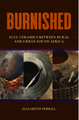
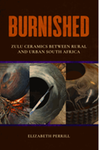
Burnished : Zulu ceramics between rural and urban South Africa
Perrill, Elizabeth
Indiana University Press
, 2022
; English
; 277 Pages
When Zulu women potters innovate or move to a more urban setting, they are asked why they have abandoned tradition. Yet when they continue to follow convention or choose to stay in rural areas, art historians speak of their work as unchanging symbols of the past. Burnished rejects both stereotypes, acknowledging the agency of rural women as innovative artists and complex individuals negotiating a biased set of power structures.
Featuring 90 color images, Burnished engages directly with individual artists and specific vessels, fracturing assumptions that Zulu ceramicists are resistant to rural transformation and insulated from urban realities. Elizabeth Perrill shares compelling narratives of women ceramic artists and the sophisticated beer pots they create—their aesthetic choices, audiences, production, and artistic lives. Simultaneously, Perrill documents the manner in which and reasons why ceramic arts, and at times the artists themselves, capitalize upon bucolic stereotypes of rural womanhood, are constrained by artistic methods, or chafe against definitions of what qualifies as a Zulu pot.
Revealing how white South Africans and global art gatekeepers have continually twisted the designation of Zulu ceramics before, during, and after apartheid, Burnished provides an engaging look at the artistry of entrepreneurial Black women too often erased from historical records.
Perrill, Elizabeth
Indiana University Press
, 2022
; English
; 277 Pages
When Zulu women potters innovate or move to a more urban setting, they are asked why they have abandoned tradition. Yet when they continue to follow convention or choose to stay in rural areas, art historians speak of their work as unchanging symbols of the past. Burnished rejects both stereotypes, acknowledging the agency of rural women as innovative artists and complex individuals negotiating a biased set of power structures.
Featuring 90 color images, Burnished engages directly with individual artists and specific vessels, fracturing assumptions that Zulu ceramicists are resistant to rural transformation and insulated from urban realities. Elizabeth Perrill shares compelling narratives of women ceramic artists and the sophisticated beer pots they create—their aesthetic choices, audiences, production, and artistic lives. Simultaneously, Perrill documents the manner in which and reasons why ceramic arts, and at times the artists themselves, capitalize upon bucolic stereotypes of rural womanhood, are constrained by artistic methods, or chafe against definitions of what qualifies as a Zulu pot.
Revealing how white South Africans and global art gatekeepers have continually twisted the designation of Zulu ceramics before, during, and after apartheid, Burnished provides an engaging look at the artistry of entrepreneurial Black women too often erased from historical records.
eBook
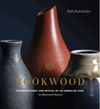
Rookwood : the rediscovery and revival of an American icon : an illustrated history
Batchelor, Bob
Rockport Publishers
, 2020
; English
; 243 Pages
Published to coincide with Rookwood’s 140th anniversary, this beautiful, collectible, fully illustrated volume tells the rich story of this female-founded, female-owned great American art pottery company. *2021 Independent Press Award Winner in the Category of Fine Arts* Author and historian Bob Batchelor tells the compelling story of this artisanal ceramics company, still operating in the heart of the Ohio River Valley from its founding to present day. Filled with behind-the-scenes artist and creator interviews, stories of Rookwood’s avid collectors, as well as never-before-seen images and documents from the company’s historic archives, you will see why Rookwood remains a pillar of true craftsmanship. About Rookwood: The Rookwood Pottery was the most famous company making art pottery in the United States in the late nineteenth century into the twentieth century, achieving an international reputation and consistently promoting artistic innovation. Proud that the pottery was “an artist’s studio, not a factory,” Rookwood Pottery is known for its exceptionally fine glazes and successful experimental designs. By assimilating the strengths of myriad aesthetic movements from the American Art Pottery Movement to Art Nouveau and Art Deco, Rookwood Pottery encouraged decorators to try unusual subjects and to explore new techniques. The Rookwood Pottery Company is located in the bustling Over-the-Rhine neighborhood of Cincinnati, Ohio—and it has been for decades. Pioneering artist Maria Longworth Nichols Storer founded the studio in the Queen City in 1880, building the business and laying the foundation for what Rookwood is today: a world-renowned artisanal ceramics company, operating in the heart of the Ohio River Valley. From New York’s Grand Central Station to The Louvre in Paris, contemporary boutique hotels to historic homes, Rookwood has truly made its mark on the world in the past three centuries. And now, it’s embarking on the next chapter. Today, Rookwood continues to build upon its rich heritage, creating high-quality pottery and architectural tile in the United States. With a team of just over 70 employees, Rookwood is deeply committed to its mission: cultivating artistic inspiration, giving back to the community, and balancing its rich legacy with forward-thinking momentum—ideas that are central to the Rookwood brand. The company takes pride in their process, their people, and their product, ultimately creating premier pieces with a story—and a one-of-a-kind luxury experience that can only be Rookwood.
Batchelor, Bob
Rockport Publishers
, 2020
; English
; 243 Pages
Published to coincide with Rookwood’s 140th anniversary, this beautiful, collectible, fully illustrated volume tells the rich story of this female-founded, female-owned great American art pottery company. *2021 Independent Press Award Winner in the Category of Fine Arts* Author and historian Bob Batchelor tells the compelling story of this artisanal ceramics company, still operating in the heart of the Ohio River Valley from its founding to present day. Filled with behind-the-scenes artist and creator interviews, stories of Rookwood’s avid collectors, as well as never-before-seen images and documents from the company’s historic archives, you will see why Rookwood remains a pillar of true craftsmanship. About Rookwood: The Rookwood Pottery was the most famous company making art pottery in the United States in the late nineteenth century into the twentieth century, achieving an international reputation and consistently promoting artistic innovation. Proud that the pottery was “an artist’s studio, not a factory,” Rookwood Pottery is known for its exceptionally fine glazes and successful experimental designs. By assimilating the strengths of myriad aesthetic movements from the American Art Pottery Movement to Art Nouveau and Art Deco, Rookwood Pottery encouraged decorators to try unusual subjects and to explore new techniques. The Rookwood Pottery Company is located in the bustling Over-the-Rhine neighborhood of Cincinnati, Ohio—and it has been for decades. Pioneering artist Maria Longworth Nichols Storer founded the studio in the Queen City in 1880, building the business and laying the foundation for what Rookwood is today: a world-renowned artisanal ceramics company, operating in the heart of the Ohio River Valley. From New York’s Grand Central Station to The Louvre in Paris, contemporary boutique hotels to historic homes, Rookwood has truly made its mark on the world in the past three centuries. And now, it’s embarking on the next chapter. Today, Rookwood continues to build upon its rich heritage, creating high-quality pottery and architectural tile in the United States. With a team of just over 70 employees, Rookwood is deeply committed to its mission: cultivating artistic inspiration, giving back to the community, and balancing its rich legacy with forward-thinking momentum—ideas that are central to the Rookwood brand. The company takes pride in their process, their people, and their product, ultimately creating premier pieces with a story—and a one-of-a-kind luxury experience that can only be Rookwood.
eBook
The Michiana potters : art, community, and collaboration in the Midwest
McGriff, Meredith A. E.
Indiana University Press
, 2020
; English
; 288 Pages
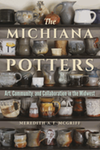
A new pottery tradition has been developing along the border of northern Indiana and southern Michigan. Despite the fact that this region is not yet an established destination for pottery collectors, Michiana potters are committed to pursuing their craft thanks to the presence of a community of like-minded artists. The Michiana Potters, an ethnographic exploration of the lives and art of these potters, examines the communal traditions and aesthetics that have developed in this region. Author Meredith A. E. McGriff identifies several shared methods and styles, such as a preference for wood-fired wares, glossy glaze surfaces, cooler colors, the dripping or layering of glazes on ceramics that are not wood-fired, the handcrafting of useful wares as opposed to sculptural work, and a tendency to borrow forms and decorative effects from other regional artists. In addition to demonstrating a methodology that can be applied to studies of other emergent regional traditions, McGriff concludes that these styles and methods form a communal bond that inextricably links the processes of creating and sharing pottery in Michiana.
McGriff, Meredith A. E.
Indiana University Press
, 2020
; English
; 288 Pages
A new pottery tradition has been developing along the border of northern Indiana and southern Michigan. Despite the fact that this region is not yet an established destination for pottery collectors, Michiana potters are committed to pursuing their craft thanks to the presence of a community of like-minded artists. The Michiana Potters, an ethnographic exploration of the lives and art of these potters, examines the communal traditions and aesthetics that have developed in this region. Author Meredith A. E. McGriff identifies several shared methods and styles, such as a preference for wood-fired wares, glossy glaze surfaces, cooler colors, the dripping or layering of glazes on ceramics that are not wood-fired, the handcrafting of useful wares as opposed to sculptural work, and a tendency to borrow forms and decorative effects from other regional artists. In addition to demonstrating a methodology that can be applied to studies of other emergent regional traditions, McGriff concludes that these styles and methods form a communal bond that inextricably links the processes of creating and sharing pottery in Michiana.

eBook
Daniel Johnston : a portrait of the artist as a potter in North Carolina
Glassie, Henry (Photographer and Drawings)
Indiana University Press
, 2020
; English
; 271 Pages
DANIEL JOHNSTON, raised on a farm in Randolph County, returned from Thailand with a new way to make monumental pots. Back home in North Carolina, he built a log shop and a whale of a kiln for wood-firing. Then he set out to create beautiful pots, grand in scale, graceful in form, and burned bright in a blend of ash and salt. With mastery achieved and apprentices to teach, Daniel Johnston turned his brain to massive installations.
First, he made a hundred large jars and lined them along the rough road that runs past his shop and kiln. Next, he arranged curving clusters of big pots inside pine frames, slatted like corn cribs, to separate them from the slick interiors of four fine galleries in succession. Then, in concluding the second phase of his professional career, Daniel Johnston built an open-air installation on the grounds around the North Carolina Museum of Art, where 178 handmade, wood-fired columns march across a slope in a straight line, 350 feet in length, that dips and lifts with the heave while the tops of the pots maintain a level horizon.
In 2000, when he was still Mark Hewitt's apprentice, Daniel Johnston met Henry Glassie, who has done fieldwork on ceramic traditions in the United States, Brazil, Italy, Turkey, Bangladesh, China, and Japan. Over the years, during a steady stream of intimate interviews, Glassie gathered the understanding that enabled him to compose this portrait of Daniel Johnston, a young artist who makes great pots in the eastern Piedmont of North Carolina.
Glassie, Henry (Photographer and Drawings)
Indiana University Press
, 2020
; English
; 271 Pages
DANIEL JOHNSTON, raised on a farm in Randolph County, returned from Thailand with a new way to make monumental pots. Back home in North Carolina, he built a log shop and a whale of a kiln for wood-firing. Then he set out to create beautiful pots, grand in scale, graceful in form, and burned bright in a blend of ash and salt. With mastery achieved and apprentices to teach, Daniel Johnston turned his brain to massive installations.
First, he made a hundred large jars and lined them along the rough road that runs past his shop and kiln. Next, he arranged curving clusters of big pots inside pine frames, slatted like corn cribs, to separate them from the slick interiors of four fine galleries in succession. Then, in concluding the second phase of his professional career, Daniel Johnston built an open-air installation on the grounds around the North Carolina Museum of Art, where 178 handmade, wood-fired columns march across a slope in a straight line, 350 feet in length, that dips and lifts with the heave while the tops of the pots maintain a level horizon.
In 2000, when he was still Mark Hewitt's apprentice, Daniel Johnston met Henry Glassie, who has done fieldwork on ceramic traditions in the United States, Brazil, Italy, Turkey, Bangladesh, China, and Japan. Over the years, during a steady stream of intimate interviews, Glassie gathered the understanding that enabled him to compose this portrait of Daniel Johnston, a young artist who makes great pots in the eastern Piedmont of North Carolina.
eBook
Global clay : themes in world ceramic traditions
Burrison, John A.
Indiana University Press
, 2017
; English
; 355 Pages
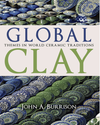
For over 25,000 years, humans across the globe have shaped, decorated, and fired clay. Despite great differences in location and time, universal themes appear in the world’s ceramic traditions, including religious influences, human and animal representations, and mortuary pottery. In Global Clay: Themes in World Ceramic Traditions, noted pottery scholar John A. Burrison explores the recurring artistic themes that tie humanity together, explaining how and why those themes appear again and again in worldwide ceramic traditions. The book is richly illustrated with over 200 full-color, cross-cultural illustrations of ceramics from prehistory to the present. Providing an introduction to different styles of folk pottery, extensive suggestions for further reading, and reflections on the future of traditional pottery around the world, Global Clay is sure to become a classic for all who love art and pottery and all who are intrigued by the human commonalities revealed through art.
Burrison, John A.
Indiana University Press
, 2017
; English
; 355 Pages
For over 25,000 years, humans across the globe have shaped, decorated, and fired clay. Despite great differences in location and time, universal themes appear in the world’s ceramic traditions, including religious influences, human and animal representations, and mortuary pottery. In Global Clay: Themes in World Ceramic Traditions, noted pottery scholar John A. Burrison explores the recurring artistic themes that tie humanity together, explaining how and why those themes appear again and again in worldwide ceramic traditions. The book is richly illustrated with over 200 full-color, cross-cultural illustrations of ceramics from prehistory to the present. Providing an introduction to different styles of folk pottery, extensive suggestions for further reading, and reflections on the future of traditional pottery around the world, Global Clay is sure to become a classic for all who love art and pottery and all who are intrigued by the human commonalities revealed through art.
eBook
Japanese and Oriental ceramics
Gorham, Hazel H.
Tuttle Publishing
, 2012
; English
; 381 Pages
Japanese and Oriental Ceramics was first published in print form by Tuttle Publishing in 1971.
This comprehensive and profusely illustrated work tells how to distinguish Japanese porcelains from Chinese, and how to recognize modern reproductions of genuine old wares. It is completely indexed, contains a lengthy bibliography, and lists Chinese dates important in any discussion of Oriental ceramics. Crammed with information on the history, esthetics, and technical aspects of the ceramics of Japan and the Orient, the book is an invaluable guide to scholars, collectors and dealers. It is in fact a work of art in itself.
Gorham, Hazel H.
Tuttle Publishing
, 2012
; English
; 381 Pages
Japanese and Oriental Ceramics was first published in print form by Tuttle Publishing in 1971.
This comprehensive and profusely illustrated work tells how to distinguish Japanese porcelains from Chinese, and how to recognize modern reproductions of genuine old wares. It is completely indexed, contains a lengthy bibliography, and lists Chinese dates important in any discussion of Oriental ceramics. Crammed with information on the history, esthetics, and technical aspects of the ceramics of Japan and the Orient, the book is an invaluable guide to scholars, collectors and dealers. It is in fact a work of art in itself.
eBook
The ceramic art of Japan: a handbook for collectors
Munsterberg, Hugo
Tuttle Publishing
, 2010
; English
; 277 Pages
Featuring dozens of color photographs and extensive commentary, this Japanese ceramics guide is an comprehensive resource for collectors and art enthusiasts.
For the collector of Japanese ceramics, the chief value of the book will lie in the author's very practical advice on what, where, and how to collect; what to pay; how to choose a dealer; how to distinguish between the genuine and the imitation; and similar matters of importance. For the non-collector who nevertheless admires Japanese ceramics, the main interest will undoubtedly lie in the concise and highly readable background information that Mr. Munsterberg presents and in his amiable manner of leading the reader to an appreciation of Japan's ceramic art.
For both the collector and the non-collector, the abundance of illustrations, many of them in color, will provide an aesthetic treat.
About this book
Munsterberg, Hugo
Tuttle Publishing
, 2010
; English
; 277 Pages
Featuring dozens of color photographs and extensive commentary, this Japanese ceramics guide is an comprehensive resource for collectors and art enthusiasts.
For the collector of Japanese ceramics, the chief value of the book will lie in the author's very practical advice on what, where, and how to collect; what to pay; how to choose a dealer; how to distinguish between the genuine and the imitation; and similar matters of importance. For the non-collector who nevertheless admires Japanese ceramics, the main interest will undoubtedly lie in the concise and highly readable background information that Mr. Munsterberg presents and in his amiable manner of leading the reader to an appreciation of Japan's ceramic art.
For both the collector and the non-collector, the abundance of illustrations, many of them in color, will provide an aesthetic treat.
About this book
