
Navigation menu
Search
Databases
All Databases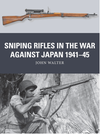
eBook
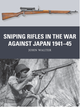
Sniping Rifles in the War Against Japan 1941-45
Walter, John; Shumate, Johnny; Gilliland, Alan
Bloomsbury Publishing
, 2024
; English
; 81 Pages
Fully illustrated, this absorbing study explores the evolving sniping technology and tactics employed by both sides in Asia and the Pacific during 1941–45. During World War II, both the Japanese and their Allied opponents made widespread use of snipers armed with a variety of rifles, scopes and accessories and prepared by widely differing levels of training and tactical doctrine. The challenges of fighting in a variety of harsh environments, from the Pacific islands to the vast expanses of China, prompted improvisation and innovation on both sides in the ongoing war between snipers and their adversaries. Often operating at relatively close ranges in restrictive terrain, snipers made particularly ingenious use of camouflage and deception as the fighting spread across Asia and the Pacific in the wake of the Pearl Harbor attack, while troops tasked with countering enemy marksmen had to learn the hard way how best to defeat a seemingly invisible enemy. Small arms expert John Walter considers the strengths and limitations of the rifles, scopes and accessories deployed by Japanese snipers and their Allied counterparts, as well as their different approaches to sniping tactics and training. Specially commissioned artwork and carefully chosen photographs illustrate this enthralling study of the sniping war in Asia and the Pacific during World War II.
Walter, John; Shumate, Johnny; Gilliland, Alan
Bloomsbury Publishing
, 2024
; English
; 81 Pages
Fully illustrated, this absorbing study explores the evolving sniping technology and tactics employed by both sides in Asia and the Pacific during 1941–45. During World War II, both the Japanese and their Allied opponents made widespread use of snipers armed with a variety of rifles, scopes and accessories and prepared by widely differing levels of training and tactical doctrine. The challenges of fighting in a variety of harsh environments, from the Pacific islands to the vast expanses of China, prompted improvisation and innovation on both sides in the ongoing war between snipers and their adversaries. Often operating at relatively close ranges in restrictive terrain, snipers made particularly ingenious use of camouflage and deception as the fighting spread across Asia and the Pacific in the wake of the Pearl Harbor attack, while troops tasked with countering enemy marksmen had to learn the hard way how best to defeat a seemingly invisible enemy. Small arms expert John Walter considers the strengths and limitations of the rifles, scopes and accessories deployed by Japanese snipers and their Allied counterparts, as well as their different approaches to sniping tactics and training. Specially commissioned artwork and carefully chosen photographs illustrate this enthralling study of the sniping war in Asia and the Pacific during World War II.
eBook
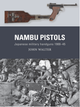
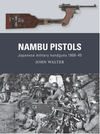
Nambu Pistols: Japanese military handguns 1900–45
Walter, John; Pegler, Martin; Hook, Adam; Gilliland, Alan
Bloomsbury Publishing
, 2023
; English
; 81 Pages
There is no abstract available for this title.
Walter, John; Pegler, Martin; Hook, Adam; Gilliland, Alan
Bloomsbury Publishing
, 2023
; English
; 81 Pages
There is no abstract available for this title.
eBook
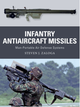
Infantry antiaircraft missiles : man-portable air defense systems
Zaloga, Steven J.
Bloomsbury Publishing
, 2023
; English
; 82 Pages
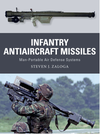
Noted authority Steven J. Zaloga charts the development, combat use, and influence of man-portable air defense systems, from the late 1960s to the present day.The first attempts at developing a man-portable air defense system (MANPADS) based around a guided missile began in the mid-1950s, as a response to the increased speed and maneuverability of jet aircraft.
This book charts the technological evolution of the MANPADS and explores their combat usage and the lessons from these encounters.
Besides detailing the missiles, it also surveys the various methods developed as countermeasures to the MANPADS threat.The first generation of MANPADS, such as the US Army's Redeye and the Soviet Strela-2 (SA-7 Grail), saw combat use in the Vietnam War in 1972 and the Yom Kippur War of 1973.
The next generation of infrared-guided MANPADS, such as the US Stinger and Soviet Igla, came to prominence following the Soviet invasion of Afghanistan in 1979.
Since the 1970s, MANPADS have been used in innumerable wars, border conflicts, civil wars and insurrections.
Featuring specially commissioned artwork and carefully chosen photographs, this study tells the story of these lethally effective weapons, from their origins to their use today.
Zaloga, Steven J.
Bloomsbury Publishing
, 2023
; English
; 82 Pages
Noted authority Steven J. Zaloga charts the development, combat use, and influence of man-portable air defense systems, from the late 1960s to the present day.The first attempts at developing a man-portable air defense system (MANPADS) based around a guided missile began in the mid-1950s, as a response to the increased speed and maneuverability of jet aircraft.
This book charts the technological evolution of the MANPADS and explores their combat usage and the lessons from these encounters.
Besides detailing the missiles, it also surveys the various methods developed as countermeasures to the MANPADS threat.The first generation of MANPADS, such as the US Army's Redeye and the Soviet Strela-2 (SA-7 Grail), saw combat use in the Vietnam War in 1972 and the Yom Kippur War of 1973.
The next generation of infrared-guided MANPADS, such as the US Stinger and Soviet Igla, came to prominence following the Soviet invasion of Afghanistan in 1979.
Since the 1970s, MANPADS have been used in innumerable wars, border conflicts, civil wars and insurrections.
Featuring specially commissioned artwork and carefully chosen photographs, this study tells the story of these lethally effective weapons, from their origins to their use today.
eBook
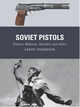
Soviet pistols: tokarev, makarov, stechkin and others
Thompson, Leroy
Bloomsbury Publishing
, 2022
; English
; 81 Pages
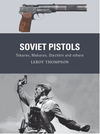
This is the absorbing story of the development, combat use and legacy of the influential sidearms used by the armed forces of the Soviet Union.
Featuring archive and present-day photography and specially commissioned artwork, this is the story of the pistols that armed the forces of the Soviet Union and its allies during and after World War II. In 1930 the TT, a single-action semi-automatic pistol developed by Fedor Vasilyevich Tokarev and firing 7.62×25mm ammunition, began to supplement the venerable Nagant M1895 revolver in Soviet military service. From 1933 the TT-33, a simplified version, was also issued; all three would equip Soviet and proxy forces throughout and after World War II, seeing action across the globe.
In 1951 a new pistol designed by Nikolay Fyodorovich Makarov entered Soviet service; it became the primary Soviet military and police sidearm during the Cold War era and continued in use into the 21st century. The 9×18mm Makarov round was used in various weapons used by Soviet allies, notably the Czech vz 82, the Hungarian FÉG PA63 and the Polish P64 and P83.The PM was quickly joined by the Stechkin machine pistol. Other specialized versions of the Makarov were developed, including the PB suppressed version and the 5.45×18mm PSM, a more compact version. Initially developed in 1990, the improved PMM version of the Makarov was intended primarily to increase the stopping power of the 9×18mm round by chambering a higher-pressure load.
In this study, noted weaponry expert Leroy Thompson tells the story of the Tokarev, Makarov, Stechkin and other handguns in service with Soviet and other forces around the world, exploring the development, combat use and legacy of these formidable firearms.
Thompson, Leroy
Bloomsbury Publishing
, 2022
; English
; 81 Pages
This is the absorbing story of the development, combat use and legacy of the influential sidearms used by the armed forces of the Soviet Union.
Featuring archive and present-day photography and specially commissioned artwork, this is the story of the pistols that armed the forces of the Soviet Union and its allies during and after World War II. In 1930 the TT, a single-action semi-automatic pistol developed by Fedor Vasilyevich Tokarev and firing 7.62×25mm ammunition, began to supplement the venerable Nagant M1895 revolver in Soviet military service. From 1933 the TT-33, a simplified version, was also issued; all three would equip Soviet and proxy forces throughout and after World War II, seeing action across the globe.
In 1951 a new pistol designed by Nikolay Fyodorovich Makarov entered Soviet service; it became the primary Soviet military and police sidearm during the Cold War era and continued in use into the 21st century. The 9×18mm Makarov round was used in various weapons used by Soviet allies, notably the Czech vz 82, the Hungarian FÉG PA63 and the Polish P64 and P83.The PM was quickly joined by the Stechkin machine pistol. Other specialized versions of the Makarov were developed, including the PB suppressed version and the 5.45×18mm PSM, a more compact version. Initially developed in 1990, the improved PMM version of the Makarov was intended primarily to increase the stopping power of the 9×18mm round by chambering a higher-pressure load.
In this study, noted weaponry expert Leroy Thompson tells the story of the Tokarev, Makarov, Stechkin and other handguns in service with Soviet and other forces around the world, exploring the development, combat use and legacy of these formidable firearms.
eBook
Grant, Neil; Dennis, Peter
Bloomsbury Publishing
, 2020
; English
; 81 Pages
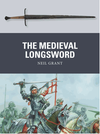
The formidable European longsword - featuring a double-edged straight blade in excess of 40in, and capable of being used with one or both hands - remains one of the most impressive and distinctive edged weapons of the late medieval era.
Also known as the 'bastard' sword and the 'hand-and-a-half' sword, the longsword evolved from the war swords and great swords of the 14th century, and emerged as a battlefield weapon in the early stages of the Hundred Years' War.
It went on to become a key weapon on the battlefields of late medieval Europe, creating a new system of sword fighting.
Drawing together period sources, modern technical analysis and his own experiences with the longsword, Neil Grant explores the origins, manufacture and evolving use of this iconic late-medieval edged weapon.
Illustrated throughout with specially commissioned full-colour artwork and an array of period illustrations and close-up photographs, this is the enthralling story of one of late-medieval Europe's most distinctive and deadly close-combat weapons.
eBook
Grant, Neil; Dennis, Peter
Bloomsbury Publishing
, 2020
; English
; 81 Pages
The formidable European longsword - featuring a double-edged straight blade in excess of 40in, and capable of being used with one or both hands - remains one of the most impressive and distinctive edged weapons of the late medieval era.
Also known as the 'bastard' sword and the 'hand-and-a-half' sword, the longsword evolved from the war swords and great swords of the 14th century, and emerged as a battlefield weapon in the early stages of the Hundred Years' War.
It went on to become a key weapon on the battlefields of late medieval Europe, creating a new system of sword fighting.
Drawing together period sources, modern technical analysis and his own experiences with the longsword, Neil Grant explores the origins, manufacture and evolving use of this iconic late-medieval edged weapon.
Illustrated throughout with specially commissioned full-colour artwork and an array of period illustrations and close-up photographs, this is the enthralling story of one of late-medieval Europe's most distinctive and deadly close-combat weapons.
eBook
Sniping rifles on the Eastern Front 1939-45
Pegler, Martin; Gilliland, Alan; Shumate, Johnny
Bloomsbury Publishing
, 2019
; English
; 81 Pages
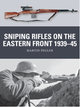
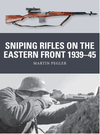
The Soviet Union had developed a significant sniping force by 1939, but the extraordinary skill and cunning displayed by Finnish snipers during the Winter War forced the Soviets to innovate.
On the other side, German sniping suffered from a lack of standardization of weapons and a lack of marksmen deployed at the start of the Great Patriotic War (1941-45).
There were few heroes in the conflict, but on both sides, the snipers were idolized - especially on the Soviet side, gaining almost mythical status. As well as traditional bolt-action weapons, both sides used several types of semi-automatic rifle, such as the SVT-38 and the Gew 41.
Offering greater firepower at the expense of long-range accuracy, such weapons would be profoundly influential in the postwar world.
Fully illustrated, this absorbing study investigates the development of sniping weapons and techniques on World War II's Eastern Front.
Pegler, Martin; Gilliland, Alan; Shumate, Johnny
Bloomsbury Publishing
, 2019
; English
; 81 Pages
The Soviet Union had developed a significant sniping force by 1939, but the extraordinary skill and cunning displayed by Finnish snipers during the Winter War forced the Soviets to innovate.
On the other side, German sniping suffered from a lack of standardization of weapons and a lack of marksmen deployed at the start of the Great Patriotic War (1941-45).
There were few heroes in the conflict, but on both sides, the snipers were idolized - especially on the Soviet side, gaining almost mythical status. As well as traditional bolt-action weapons, both sides used several types of semi-automatic rifle, such as the SVT-38 and the Gew 41.
Offering greater firepower at the expense of long-range accuracy, such weapons would be profoundly influential in the postwar world.
Fully illustrated, this absorbing study investigates the development of sniping weapons and techniques on World War II's Eastern Front.
eBook
Williams, Gareth; Shumate, Johnny
Bloomsbury Publishing
, 2019
; English
; 81 Pages
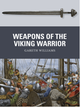
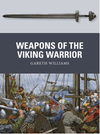
Between the late 8th and late 11th century Viking warriors had a massive impact not just in northern Europe, but across a huge arc from the western Mediterranean round through northern Europe and the Baltic to the Middle East and Central Asia.
Their success depended in part on their skills in battle, their unique sense of strategic mobility, and on the quality of their weapons and equipment.
Written by an expert on early medieval weaponry, this book examines the weapons of the typical Viking warrior, dispels some of the myths of the popular image, such as double-headed axes, and considers the range of weapons that actually underpinned the Vikings' success including bows and arrows.
Williams, Gareth; Shumate, Johnny
Bloomsbury Publishing
, 2019
; English
; 81 Pages
Between the late 8th and late 11th century Viking warriors had a massive impact not just in northern Europe, but across a huge arc from the western Mediterranean round through northern Europe and the Baltic to the Middle East and Central Asia.
Their success depended in part on their skills in battle, their unique sense of strategic mobility, and on the quality of their weapons and equipment.
Written by an expert on early medieval weaponry, this book examines the weapons of the typical Viking warrior, dispels some of the myths of the popular image, such as double-headed axes, and considers the range of weapons that actually underpinned the Vikings' success including bows and arrows.

eBook
Harriman, Bill; Dennis, Peter; Gilliland, Alan
Bloomsbury Publishing
, 2019
; English
; 81 Pages
Entering service in 1897, the Arisaka family of bolt-action rifles armed Japanese troops and others through two world wars and many other conflicts, including the Russo-Japanese War of 1904-05.
Issued in long and short versions - the latter for cavalry and specialists - the Type 30 was the first main Arisaka model, arming Imperial Japan's forces during the Russo-Japanese War, though after the war it was refined into the Type 38, which would still be in use in 1945.
The main Arisaka rifle of World War II though was the Type 99.
Featuring full-colour artwork as well as archive and close-up photographs, this is the absorbing story of the rifles arming Imperial Japan's forces, from the trenches of Mukden in 1905 to the beaches of Okinawa 40 years later.

eBook
Harriman, Bill; Dennis, Peter; Gilliland, Alan
Bloomsbury Publishing
, 2019
; English
; 81 Pages
Entering service in 1897, the Arisaka family of bolt-action rifles armed Japanese troops and others through two world wars and many other conflicts, including the Russo-Japanese War of 1904-05.
Issued in long and short versions - the latter for cavalry and specialists - the Type 30 was the first main Arisaka model, arming Imperial Japan's forces during the Russo-Japanese War, though after the war it was refined into the Type 38, which would still be in use in 1945.
The main Arisaka rifle of World War II though was the Type 99.
Featuring full-colour artwork as well as archive and close-up photographs, this is the absorbing story of the rifles arming Imperial Japan's forces, from the trenches of Mukden in 1905 to the beaches of Okinawa 40 years later.
eBook
Loades, Mike
Bloomsbury Publishing
, 2018
; English
; 81 Pages
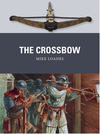
Technologically sophisticated and powerful, the crossbow has long enjoyed a popular reputation for villainous superiority because it could be used with little training as a weapon of assassination.
The study of bow designs, trigger mechanisms, and spanning devices reveals a tale of considerable mechanical ingenuity; advances that produced a battlefield weapon requiring comparatively little training to use.
In this study acknowledged weaponry expert Mike Loades traces the origins, development, combat record and lasting legacy of the crossbow, the formidable projectile weapon that played a key role in a host of battles and sieges across Europe and Asia.
eBook
Loades, Mike
Bloomsbury Publishing
, 2018
; English
; 81 Pages
Technologically sophisticated and powerful, the crossbow has long enjoyed a popular reputation for villainous superiority because it could be used with little training as a weapon of assassination.
The study of bow designs, trigger mechanisms, and spanning devices reveals a tale of considerable mechanical ingenuity; advances that produced a battlefield weapon requiring comparatively little training to use.
In this study acknowledged weaponry expert Mike Loades traces the origins, development, combat record and lasting legacy of the crossbow, the formidable projectile weapon that played a key role in a host of battles and sieges across Europe and Asia.
eBook
Larsen, Alan; Yallop, Henry
Bloomsbury Publishing
, 2017
; English
; 81 Pages
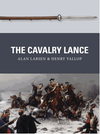
The development of cavalry firearms and the widespread disappearance of armour from the European battlefield saw a decline in the use of the cavalry lance in early modern warfare.
However, by 1800 the lance, much changed from its medieval predecessors in both form and function, was back.During the next century the use of the lance spread to the armed forces of almost every Western country, seeing action in every major conflict from the Napoleonic Wars to World War I including the Crimean and Franco-Prussian wars and across the Atlantic in the American Civil War.
The lance even reached the colonial conflicts of the Anglo-Sikh and Boer wars.
It was not until the disappearance of the mounted warrior from the battlefield that the lance was consigned to history.Featuring specially commissioned artwork and drawing upon a variety of sources, this is the engaging story of the cavalry lance at war during the 19th and 20th centuries, from Waterloo to the Somme.
eBook
Larsen, Alan; Yallop, Henry
Bloomsbury Publishing
, 2017
; English
; 81 Pages
The development of cavalry firearms and the widespread disappearance of armour from the European battlefield saw a decline in the use of the cavalry lance in early modern warfare.
However, by 1800 the lance, much changed from its medieval predecessors in both form and function, was back.During the next century the use of the lance spread to the armed forces of almost every Western country, seeing action in every major conflict from the Napoleonic Wars to World War I including the Crimean and Franco-Prussian wars and across the Atlantic in the American Civil War.
The lance even reached the colonial conflicts of the Anglo-Sikh and Boer wars.
It was not until the disappearance of the mounted warrior from the battlefield that the lance was consigned to history.Featuring specially commissioned artwork and drawing upon a variety of sources, this is the engaging story of the cavalry lance at war during the 19th and 20th centuries, from Waterloo to the Somme.
