
Navigation menu
Search
Databases
All Databases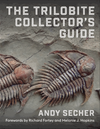
eBook
The trilobite collector’s guide
Secher, Andy
Columbia University Press
, 2024
; English
; 472 Pages
For more than 250 million years, the primeval oceans of the Paleozoic teemed with trilobites. These hardy invertebrates evolved into an astonishing array of separate species—more than 25,000 at last count—and much remains unknown about these once-ubiquitous creatures. Fossil enthusiasts are captivated by trilobites’ diversity and adaptability, enthralled by the possibility of catching a glimpse of a transcendently strange past.
Andy Secher—one of the most prolific trilobite collectors in the world—takes readers on an entertaining and enlightening journey to the distant epoch when these ancient arthropods swarmed through the seas. The Trilobite Collector’s Guide presents a series of “Top Ten” lists covering everything from celebrated Cambrian localities and world-class fossil shows to invaluable collecting tips and ways to spot a fake trilobite. These brisk and often witty chapters enumerate trilobites in all their beauty and strangeness, from the most common to the ridiculously rare, the outrageously old to the last in line. The Trilobite Collector’s Guide showcases more than 350 full-color photographs, mostly of stunning specimens from Secher’s personal collection, that put trilobites’ staggering variety and complexity on full display. Engaging and informative, this book lets readers see the world of trilobites as it’s never been seen before.
Secher, Andy
Columbia University Press
, 2024
; English
; 472 Pages
For more than 250 million years, the primeval oceans of the Paleozoic teemed with trilobites. These hardy invertebrates evolved into an astonishing array of separate species—more than 25,000 at last count—and much remains unknown about these once-ubiquitous creatures. Fossil enthusiasts are captivated by trilobites’ diversity and adaptability, enthralled by the possibility of catching a glimpse of a transcendently strange past.
Andy Secher—one of the most prolific trilobite collectors in the world—takes readers on an entertaining and enlightening journey to the distant epoch when these ancient arthropods swarmed through the seas. The Trilobite Collector’s Guide presents a series of “Top Ten” lists covering everything from celebrated Cambrian localities and world-class fossil shows to invaluable collecting tips and ways to spot a fake trilobite. These brisk and often witty chapters enumerate trilobites in all their beauty and strangeness, from the most common to the ridiculously rare, the outrageously old to the last in line. The Trilobite Collector’s Guide showcases more than 350 full-color photographs, mostly of stunning specimens from Secher’s personal collection, that put trilobites’ staggering variety and complexity on full display. Engaging and informative, this book lets readers see the world of trilobites as it’s never been seen before.
eBook
Science and art : the painted surface
Sgamellotti, Antonio; Brunetti, Brunetto Giovanni; Miliani, Costanza
Royal Society of Chemistry
, 2020
; English
; 645 Pages
Science and art are increasingly interconnected in the activities of the study and conservation of works of art. Science plays a key role in cultural heritage, from developing new analytical techniques for studying the art, to investigating new ways of preserving the materials for the future. For example, high resolution multispectral examination of paintings allows art historians to view underdrawings barely visible before, while the use of non-invasive and micro-sampling analytical techniques allow scientists to identify pigments and binders that help art conservators in their work. It also allows curators to understand more about how the artwork was originally painted.
Through a series of case studies written by scientists together with art historians, archaeologists and conservators, Science and Art: The Painted Surface demonstrates how the cooperation between science and humanities can lead to an increased understanding of the history of art and to better techniques in conservation. The examples used in the book cover paintings from ancient history, Renaissance, modern, and contemporary art, belonging to the artistic expressions of world regions from the Far East to America and Europe. Topics covered include the study of polychrome surfaces from pre-Columbian and medieval manuscripts, the revelation of hidden images below the surface of Van Gogh paintings and conservation of acrylic paints in contemporary art.
Presented in an easily readable form for a large audience, the book guides readers into new areas uncovered by the link between science and art. The book features contributions from leading institutions across the globe including the Metropolitan Museum of Art, New York; Art Institute of Chicago; Getty Conservation Institute; Opificio delle Pietre Dure, Firenze; National Gallery of London; Tate Britain; Warsaw Academy of Fine Art and the National Gallery of Denmark as well as a chapter covering the Thangka paintings by Nobel Prize winner Richard Ernst.
Sgamellotti, Antonio; Brunetti, Brunetto Giovanni; Miliani, Costanza
Royal Society of Chemistry
, 2020
; English
; 645 Pages
Science and art are increasingly interconnected in the activities of the study and conservation of works of art. Science plays a key role in cultural heritage, from developing new analytical techniques for studying the art, to investigating new ways of preserving the materials for the future. For example, high resolution multispectral examination of paintings allows art historians to view underdrawings barely visible before, while the use of non-invasive and micro-sampling analytical techniques allow scientists to identify pigments and binders that help art conservators in their work. It also allows curators to understand more about how the artwork was originally painted.
Through a series of case studies written by scientists together with art historians, archaeologists and conservators, Science and Art: The Painted Surface demonstrates how the cooperation between science and humanities can lead to an increased understanding of the history of art and to better techniques in conservation. The examples used in the book cover paintings from ancient history, Renaissance, modern, and contemporary art, belonging to the artistic expressions of world regions from the Far East to America and Europe. Topics covered include the study of polychrome surfaces from pre-Columbian and medieval manuscripts, the revelation of hidden images below the surface of Van Gogh paintings and conservation of acrylic paints in contemporary art.
Presented in an easily readable form for a large audience, the book guides readers into new areas uncovered by the link between science and art. The book features contributions from leading institutions across the globe including the Metropolitan Museum of Art, New York; Art Institute of Chicago; Getty Conservation Institute; Opificio delle Pietre Dure, Firenze; National Gallery of London; Tate Britain; Warsaw Academy of Fine Art and the National Gallery of Denmark as well as a chapter covering the Thangka paintings by Nobel Prize winner Richard Ernst.
eBook
Conservation science: heritage materials
May, Eric; Jones, Mark
Royal Society of Chemistry
, 2007
; English
; 391 Pages
This book provides an essential guide and reference source for those working in all areas of heritage conservation, Conservation of artefacts and heritage materials is an increasingly popular and fascinating area, spanning both historical and scientific disciplines. Materials come in many forms ranging from sunken ships to tapestries, from buildings to books. With this wide range of matrices and materials to analyse and preserve, an interdisciplinary approach is needed drawing upon skills from many areas of knowledge. Conservation Science: Heritage Materials links these fields of research together forming a comprehensive text book that discusses analytical aspects, wall paintings, organic and inorganic materials. It provides up to date information on subjects including research on decay and degradation and an understanding of the deterioration mechanisms of historic and artistic works. Also included are a number of case studies of particularly important finds including the upkeep of the Mary Rose and the preservation of the sail on Nelsons ship HMS Victory. This book provides an essential guide and reference source for those working in all areas of heritage conservation
May, Eric; Jones, Mark
Royal Society of Chemistry
, 2007
; English
; 391 Pages
This book provides an essential guide and reference source for those working in all areas of heritage conservation, Conservation of artefacts and heritage materials is an increasingly popular and fascinating area, spanning both historical and scientific disciplines. Materials come in many forms ranging from sunken ships to tapestries, from buildings to books. With this wide range of matrices and materials to analyse and preserve, an interdisciplinary approach is needed drawing upon skills from many areas of knowledge. Conservation Science: Heritage Materials links these fields of research together forming a comprehensive text book that discusses analytical aspects, wall paintings, organic and inorganic materials. It provides up to date information on subjects including research on decay and degradation and an understanding of the deterioration mechanisms of historic and artistic works. Also included are a number of case studies of particularly important finds including the upkeep of the Mary Rose and the preservation of the sail on Nelsons ship HMS Victory. This book provides an essential guide and reference source for those working in all areas of heritage conservation
